Ireland
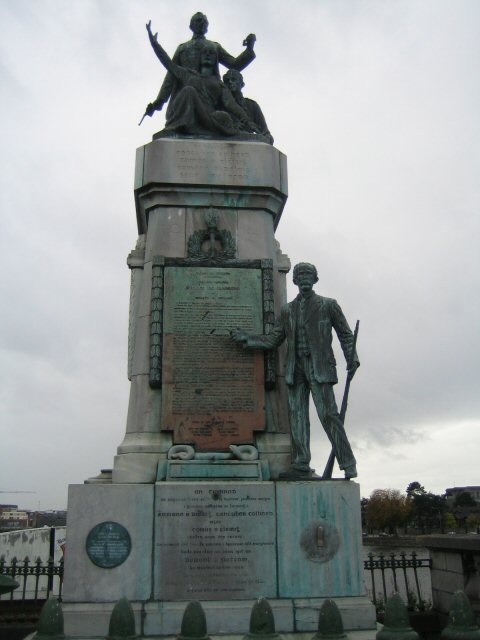
War of Independence Commemorative Military Memorial
Memorial · County Roscommon
Archaeological site

Rathcroghan (Irish: Ráth Cruachan, meaning 'fort of Cruachan') is a complex of archaeological sites near Tulsk in County Roscommon, Ireland. It is identified as the site of Cruachan, the traditional capital of the Connachta, the prehistoric and early medieval rulers of the kingdom of Connacht. Rathcroghan is one of the royal sites of Ireland. The ritual landscape extends over 6 square kilometres (2.3 sq mi) and consists of over 240 archaeological sites, 60 of which are protected national monuments. According to National Geographic, the site may be "Europe's largest unexcavated royal complex". The monuments range from the Neolithic (4000–2500 BC), the Bronze (2500–500 BC) and Iron Ages (500 BC–400 AD), to the medieval period. These monuments include burial mounds, ringforts and medieval field boundaries amongst others. The most prominent of these are the multi-period Rathcroghan Mound, the Oweynagat cave, the Mucklaghs (a set of linear earthworks), and the Carnfree medieval complex. There are many historic references to Rathcroghan (Ráth Crúachan) recorded in early medieval manuscripts, including the 12th-century Lebor na hUidre. Rathcroghan is recorded as the location of one of the...
The Rathcroghan complex has over 240 archaeological sites – 60 of which are classed as national monuments – scattered over approximately 4 square miles (10 km 2 ). They range in date from the Neolithic to the medieval period and the monument categories include burial mounds, ringforts, linear earthworks and enclosures. [ citation needed ]
The focal point of the complex, Rathcroghan mound is a broad, flat-topped circular mound with an average diameter of 89 metres (292 ft) at the base and a height of 5.5 m (18 ft). Gently sloping ramps to the east and west give access to the summit on which there are traces of a small mound. Surveying has revealed that Rathcroghan mound was built on top of an existing monument that was made of two concentric stone built ring banks. A huge enclosure measuring 360 m (1,180 ft) in diameter and 5 m (16 ft) in depth was also discovered during surveying. This enclosure surrounds the great mound and various other monuments, facilitating comparisons with other royal sites in Ireland such as Tara, Emain Macha and Dún Ailinne, which have similar enclosures.
Rathmore (from Irish Ráth Mór meaning "great fort"). It is convex in shape with a diameter of 40 m (130 ft) and surrounded by a 7 m (23 ft) wide ditch. This grass-covered, steep-sided mound is suggested to date from the late phase in the Iron Age into the early medieval period. Although it is similar to a ringfort, the apex of the mound is considered too small. Potential post holes found at the top of the mound may suggest that this was the site of an Iron Age communal hall or similar circular structure. Geophysical surveys indicate evidence of hearths, pits and ovens on the interior which accords with the use of the mound for habitation.
Rathnadarve (from Irish Ráth na dTarbh, 'fort of the bulls'). West of Rathcroghan mound is a large circular ring fort with a considerable bank and external ditch. There are several breaks in the bank, one at the north east being a possible entrance. This is traditionally the site of the fight between the bulls Donn Cuailnge and Finnbennach at the end of the epic Táin Bó Cúailnge.

Relignaree (from Irish Reilig na Rí, 'burial place (or graveyard) of the kings'). This is a large circular enclosure with a diameter of 100 m (330 ft) and a stone and earth bank of 1 m (3 ft 3 in) high. In the interior of the enclosure there are traces of a smaller circular enclosure, with a diameter of 48 m (157 ft). Ancient field boundary banks run across this site, seeming to divide it into four unequal segments, and the remains of five rectangular houses are visible in and around the site. In 1872 the remains of a souterrain in the south-west quadrant were excavated and animal bones were found.
The Irish name for this site is Uaimh na gCat which translates as 'Cave of the Cats'. This is a natural narrow limestone cave with a man-made souterrain at the entrance. Originally the entrance to the souterrain was contained within an earthen mound, which was disturbed by the construction of a road in the 1930s. The souterrain is constructed of drystone walling, orthostats and lintels (with Ogham inscriptions ), and measures a total of approximately 10.5 m (34 ft) from the entrance to the natural cave. The natural cave extends for a further 37 m (121 ft). There is an ogham inscription on the overhead lintel just inside the entrance to the souterrain which reads 'VRAICCI...MAQI MEDVVI'. In translation this would read 'of Fraech, son of Medb', Fraech being associated with Cruachan and Medb in the Táin Bó Cúailnge. Fraech is also associated with the nearby monument of Carnfee (Carn Fraích). There is a second ogham inscription on another lintel inside the passageway, barely visible, which reads 'QR G SMU'. This inscription is too incomplete to enable a confident reading.
This mound was supposed to be the burial place of Dathí, the last pagan High King of Ireland. It appears to be an embanked burial mound with an overall diameter of 40 m (130 ft), with opposed entrances on the east and west. There is a pillar stone of red sandstone atop the mound, the stone standing 1.85 m (6 ft 1 in) high. Macalister's investigations in 1913 revealed that the mound was carved out of a natural gravel ridge, and furthermore, limited excavation in 1981 confirmed this. No graves were found at this excavation, although charcoal samples retrieved suggest a building date of between 200 BC – 200 AD. This date conflicts with the legend of this being Dathí's final resting place, as he was supposed to have died around 429 AD, at least 200 years later than the creation of this site.
Folklore tells us that these huge earthworks are the results of the rooting of a giant boar, with muic being the Irish word for pig. They are two linear earthworks which consist of double banks with three accompanying ditches which run north-east and south-west in a curving parallel course at a distance of 78 m (256 ft) apart. The Northern Mucklagh is the shorter of the two, measuring 100 m (330 ft), but is impressively massive in its construction. The Southern Mucklagh is significantly longer, measuring approximately 280 m (920 ft). The function of these earthworks is unclear.
Rathbeg, "small fort", has been categorised as a ring barrow with three concentric rings that encircle the barrow in a tiered effect. The mound is located 600 m (2,000 ft) north west of Rathcroghan mound. It has a double ditch on three sides of the monument and an extra ditch on the western side. There is a small cairn at the summit surrounded by small banks and ditches, which creates the terracing. The mound is approximately 36 m (118 ft) in diameter. Worked flint discovered on the mound dates from the Iron Age and possibly the Bronze Age, however the structure itself would be consistent with Neolithic monuments.

Cashelmannan comes from Irish Caiseal Mhanannán, which means' Manannán 's fort', referring to a deity from Irish mythology, Manannán mac Lir. These are the foundation remains of a trivallate oval stone fort, with three closely spaced concentric banks of earth and stone measuring an average of 1.5 m (4 ft 11 in) in width each. The internal diameter measures 40 m (130 ft) with the external measurements being 57 m (187 ft) north/south and 63 m (207 ft) east/west. Attached to the main enclosure on the north and east sides are two rectangular enclosures, each defined by a singular bank. The exact use of Cashelmanannan is unknown, as excavation has not taken place, but the fact that it is the only structure in the complex built of stone suggests a high-status building with good defensive features.
- Ancient Avenue – A sunken avenue or trackway surrounded by two low, parallel banks. Part of it intersects with the outer circular bank and ditch of Rathscreig, a site with a small mound at the center. The avenue which is roughly 15 m (49 ft) wide seems to end at Flanagan's Fort, another ringfort with a small mound at the center. Both these forts were built at a later date than the avenue.
The focal point of the complex, Rathcroghan mound is a broad, flat-topped circular mound with an average diameter of 89 metres (292 ft) at the base and a height of 5.5 m (18 ft). Gently sloping ramps to the east and west give access to the summit on which there are traces of a small mound. Surveying has revealed that Rathcroghan mound was built on top of an existing monument that was made of two concentric stone built ring banks. A huge enclosure measuring 360 m (1,180 ft) in diameter and 5 m (16 ft) in depth was also discovered during surveying. This enclosure surrounds the great mound and various other monuments, facilitating comparisons with other royal sites in Ireland such as Tara, Emain Macha and Dún Ailinne, which have similar enclosures.
(from Irish Ráth Mór meaning "great fort"). It is convex in shape with a diameter of 40 m (130 ft) and surrounded by a 7 m (23 ft) wide ditch. This grass-covered, steep-sided mound is suggested to date from the late phase in the Iron Age into the early medieval period. Although it is similar to a ringfort, the apex of the mound is considered too small. Potential post holes found at the top of the mound may suggest that this was the site of an Iron Age communal hall or similar circular structure. Geophysical surveys indicate evidence of hearths, pits and ovens on the interior which accords with the use of the mound for habitation.
(from Irish Ráth na dTarbh, 'fort of the bulls'). West of Rathcroghan mound is a large circular ring fort with a considerable bank and external ditch. There are several breaks in the bank, one at the north east being a possible entrance. This is traditionally the site of the fight between the bulls Donn Cuailnge and Finnbennach at the end of the epic Táin Bó Cúailnge.

(from Irish Reilig na Rí, 'burial place (or graveyard) of the kings'). This is a large circular enclosure with a diameter of 100 m (330 ft) and a stone and earth bank of 1 m (3 ft 3 in) high. In the interior of the enclosure there are traces of a smaller circular enclosure, with a diameter of 48 m (157 ft). Ancient field boundary banks run across this site, seeming to divide it into four unequal segments, and the remains of five rectangular houses are visible in and around the site. In 1872 the remains of a souterrain in the south-west quadrant were excavated and animal bones were found.
The Irish name for this site is Uaimh na gCat which translates as 'Cave of the Cats'. This is a natural narrow limestone cave with a man-made souterrain at the entrance. Originally the entrance to the souterrain was contained within an earthen mound, which was disturbed by the construction of a road in the 1930s. The souterrain is constructed of drystone walling, orthostats and lintels (with Ogham inscriptions ), and measures a total of approximately 10.5 m (34 ft) from the entrance to the natural cave. The natural cave extends for a further 37 m (121 ft). There is an ogham inscription on the overhead lintel just inside the entrance to the souterrain which reads 'VRAICCI...MAQI MEDVVI'. In translation this would read 'of Fraech, son of Medb', Fraech being associated with Cruachan and Medb in the Táin Bó Cúailnge. Fraech is also associated with the nearby monument of Carnfee (Carn Fraích). There is a second ogham inscription on another lintel inside the passageway, barely visible, which reads 'QR G SMU'. This inscription is too incomplete to enable a confident reading.
This mound was supposed to be the burial place of Dathí, the last pagan High King of Ireland. It appears to be an embanked burial mound with an overall diameter of 40 m (130 ft), with opposed entrances on the east and west. There is a pillar stone of red sandstone atop the mound, the stone standing 1.85 m (6 ft 1 in) high. Macalister's investigations in 1913 revealed that the mound was carved out of a natural gravel ridge, and furthermore, limited excavation in 1981 confirmed this. No graves were found at this excavation, although charcoal samples retrieved suggest a building date of between 200 BC – 200 AD. This date conflicts with the legend of this being Dathí's final resting place, as he was supposed to have died around 429 AD, at least 200 years later than the creation of this site.
Folklore tells us that these huge earthworks are the results of the rooting of a giant boar, with muic being the Irish word for pig. They are two linear earthworks which consist of double banks with three accompanying ditches which run north-east and south-west in a curving parallel course at a distance of 78 m (256 ft) apart. The Northern Mucklagh is the shorter of the two, measuring 100 m (330 ft), but is impressively massive in its construction. The Southern Mucklagh is significantly longer, measuring approximately 280 m (920 ft). The function of these earthworks is unclear.
, "small fort", has been categorised as a ring barrow with three concentric rings that encircle the barrow in a tiered effect. The mound is located 600 m (2,000 ft) north west of Rathcroghan mound. It has a double ditch on three sides of the monument and an extra ditch on the western side. There is a small cairn at the summit surrounded by small banks and ditches, which creates the terracing. The mound is approximately 36 m (118 ft) in diameter. Worked flint discovered on the mound dates from the Iron Age and possibly the Bronze Age, however the structure itself would be consistent with Neolithic monuments.
Closest places in our Ireland guide.
More places to explore in Ireland.