
Serbia
Museum of Ponišavlje
Museum · Pirot
Church building

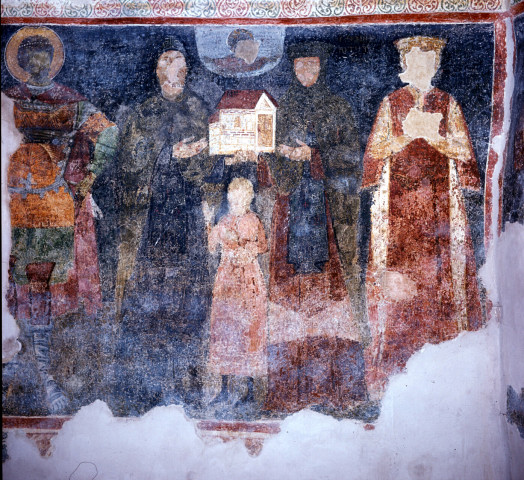
The Church of St. Petka in Staničenje (Serbian Cyrillic: Црква Свете Петке, Bulgarian: Църква „Света Петка“) is the oldest church in Staničenje, Serbia. In the Middle Ages it was known as the Church of St. Nikola, a Bulgarian monument dating from the beginning of the rule of Tsar Ivan Alexander in the 1330s. The church is located near Pirot, about 10 kilometers west at the foot of Belava Mountain. It was built on an elevated plateau above the river coast of Nišava, near Staničenje village and the confluence of Temštica, near the main road from Sofia to Niš. A fresco notes that the church was built in 1331-1332. In 1967, the church was declared a Cultural Monument of Exceptional Importance in Serbia. Radivoje Ljubinković (1910–1979), adviser of the Archeological Institute in Belgrade, visited the building in 1972 and again between 1974 and 1977. Final conservation and restoration of painted walls (frescoes) was made between 1975 and 1978 by Zdenka Živković, a picture restorer from Belgrade.
The Church of St. Petka, formerly the Church of St. Nikola, is the oldest church in Staničenje. The fresco epitaph which is written on the west wall above the entrance notes that Arsenije, Jefimija, Konstantin and some other members painted and built the church between 1331 and 1332 in the time of Bulgarian Emperor Ivan Alexander ( bulg. Ivan Asen ). Some of the people mentioned on the fresco epitaph were already dead by the time the church was completed, so construction was finished by their descendants. Later, a narthex and porch on the south side of the church was built but not preserved. A vestibule with an open wooden porch was built in the 19th century.
No written information about the church survives from the Middle Ages under its former dedication to St.Nikola. In later centuries, several historical sources of data contain statements about the church in the late 18th and early 19th centuries. In the memoirs of archpriest Aleksa Minčić, the following is noted:
"A long time ago, it must have been at the end of the 18th century, the priests and all the people who happened to be [in the church] perished, so after that the church was closed for the next 30 years. And it was like this: one year, just for Annunciation, in the time when the priests organized a Divine Liturgy, in the church and the churchyard were many people. Suddenly, [the thugs from] Kardzhali struck and attacked the people in the church and churchyard, and the most horrible killing and slaughtering of people and priests began. All people and priests were killed that day. Everything was plundered and the church was almost destroyed in that Kardzhali action. And today, when someone digs in the churchyard, human bones are found. Those are the bones from the Annunciation. Since then, the church in Staničenje could no longer serve its purpose until 1829. In that time, [it] did not have a priest because they were often killed. In that year, 1829, the people of Staničenje get one priest and they ask the landowner to allow them to recover back the church so it can serve its purpose. The landowner accommodates them under the condition that they must give him, in the name of a church holiday, 26th July, a sterile sheep every year. People of Staničenje recovered the church and it began to serve again to its purpose, and the landowner, since that year, received sterile sheep from the village every year."
The church was desecrated for the last time in the fall of 1877, following the liberation from the Ottoman Empire. The Circassians plundered, looted, and desecrated all of Staničenje, also burning all the liturgical books in the Church of St. Petka.

During the restoration which followed soon after liberation, the church received its first church bells. On one of them is a relief of St. Sava and an inscription which reads:
- "After 500 years of slavery under the Turks, for the first time, we ring out the bell in remembrance of our posterity and for the glory of the Church of St. Petka - Staničenje municipality." At the bottom of the bell, the year 1882 is engraved.
On the second bell, an inscription reads:
- "To commemorate our liberation from the Turks, and to the glory of our King Milan M. Obrenović, we pour out this bell. - From Villagers of Staničenje to our church St. Petka." Around the perimeter of the bottom of this bell is inscribed "Đorđe Bota and the sons" and also the year 1882. [ citation needed ]
In the 1970s, Radivoje Ljubinković carried out archeological research, including interviewing the oldest inhabitants of the village. From this, he learned that the church had not been significantly rebuilt or enlarged in the previous century (meaning after the liberation in 1877), and the final form was acquired during Turkish rule. He recorded a legend that the main church in the village had been the church of St. Jovan the Baptist, once located near the present cemetery; after its demolition, the Church of St. Petka became the village church.

The Church of St. Petka, formerly the Church of St. Nikola, is the oldest church in Staničenje. The fresco epitaph which is written on the west wall above the entrance notes that Arsenije, Jefimija, Konstantin and some other members painted and built the church between 1331 and 1332 in the time of Bulgarian Emperor Ivan Alexander ( bulg. Ivan Asen ). Some of the people mentioned on the fresco epitaph were already dead by the time the church was completed, so construction was finished by their descendants. Later, a narthex and porch on the south side of the church was built but not preserved. A vestibule with an open wooden porch was built in the 19th century.
No written information about the church survives from the Middle Ages under its former dedication to St.Nikola. In later centuries, several historical sources of data contain statements about the church in the late 18th and early 19th centuries. In the memoirs of archpriest Aleksa Minčić, the following is noted:
"A long time ago, it must have been at the end of the 18th century, the priests and all the people who happened to be [in the church] perished, so after that the church was closed for the next 30 years. And it was like this: one year, just for Annunciation, in the time when the priests organized a Divine Liturgy, in the church and the churchyard were many people. Suddenly, [the thugs from] Kardzhali struck and attacked the people in the church and churchyard, and the most horrible killing and slaughtering of people and priests began. All people and priests were killed that day. Everything was plundered and the church was almost destroyed in that Kardzhali action. And today, when someone digs in the churchyard, human bones are found. Those are the bones from the Annunciation. Since then, the church in Staničenje could no longer serve its purpose until 1829. In that time, [it] did not have a priest because they were often killed. In that year, 1829, the people of Staničenje get one priest and they ask the landowner to allow them to recover back the church so it can serve its purpose. The landowner accommodates them under the condition that they must give him, in the name of a church holiday, 26th July, a sterile sheep every year. People of Staničenje recovered the church and it began to serve again to its purpose, and the landowner, since that year, received sterile sheep from the village every year."
The church was desecrated for the last time in the fall of 1877, following the liberation from the Ottoman Empire. The Circassians plundered, looted, and desecrated all of Staničenje, also burning all the liturgical books in the Church of St. Petka.
During the restoration which followed soon after liberation, the church received its first church bells. On one of them is a relief of St. Sava and an inscription which reads:
- "After 500 years of slavery under the Turks, for the first time, we ring out the bell in remembrance of our posterity and for the glory of the Church of St. Petka - Staničenje municipality." At the bottom of the bell, the year 1882 is engraved.
On the second bell, an inscription reads:
- "To commemorate our liberation from the Turks, and to the glory of our King Milan M. Obrenović, we pour out this bell. - From Villagers of Staničenje to our church St. Petka." Around the perimeter of the bottom of this bell is inscribed "Đorđe Bota and the sons" and also the year 1882. [ citation needed ]
In the 1970s, Radivoje Ljubinković carried out archeological research, including interviewing the oldest inhabitants of the village. From this, he learned that the church had not been significantly rebuilt or enlarged in the previous century (meaning after the liberation in 1877), and the final form was acquired during Turkish rule. He recorded a legend that the main church in the village had been the church of St. Jovan the Baptist, once located near the present cemetery; after its demolition, the Church of St. Petka became the village church.
The elevated plateau above the coast of the Nišava river and its local microenvironment, where the church is located, represents a dominant strategic position. Soil composition on which church is built consist of fluvial sediments: earth with sand, fine gravel, and many of pebbles of various sizes.
Closest places in our Serbia guide.
More places to explore in Serbia.


