Germany
Andreaskirche (Erfurt)
Church building · Erfurt
Museum

The Memorial and Education Centre Andreasstraße (German: Gedenk- und Bildungsstätte Andreasstraße), is a museum in Erfurt, Germany, which is housed in a former prison used by the East German Ministry for State Security (Stasi). It is informally known as the Stasi Museum. From 1952 until 1989, over 5000 political prisoners were held on remand and interrogated in the Andreasstraße prison, which was one of 17 Stasi remand prisons in the German Democratic Republic (East Germany). The museum was opened in 2013 as a memorial to repression and resistance in the Thuringia region during the GDR dictatorship. Its permanent exhibitions focus on the experiences of the prison's inmates, the activities of the Stasi, life under the dictatorship, and the Peaceful Revolution which led to German reunification. On 4 December 1989, local citizens stormed and occupied the prison as well as the neighbouring Stasi district headquarters to stop the mass destruction of Stasi files. Some Stasi employees were thrown out of upper floor windows and beaten after falling to the streets below, but there were no deaths or serious injuries. It was the first of many occupations of Stasi premises throughout the country...
Shortly after German unification in 1871, a new courthouse and prison ensemble were planned, as the city had grown rapidly from a population of 16,000 in 1802 to 100,000. During the 19th century, prison had become the most important form of criminal punishment in Prussia, in preference to corporal punishment which had previously been favoured.
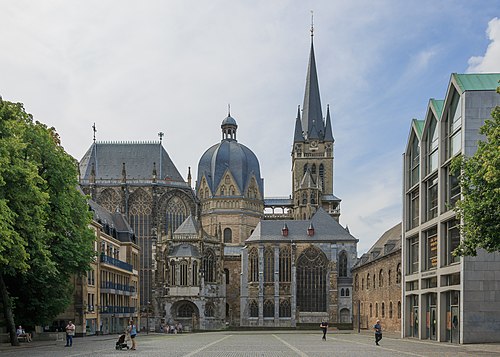
The new buildings were constructed on a park neighbouring Erfurt's Cathedral Square and below the town fortress, Petersberg Citadel. Building began in 1874; the three-storey, red-brick, neo-gothic prison came into use in October 1878. The stone-clad courthouse around the corner from it opened nine months later in 1879.
The new prison initially accommodated 110 male and female inmates. It was further reconfigured and by 1911 the average occupancy was 198: 162 men in 34 cells and 36 women in 8 cells. It served as a remand prison for people awaiting trial and for holding those convicted of property offences, fraud and violent crime. People were also incarcerated on political charges such as Lèse-majesté and going on strike. Newspapers editors who published articles in favour of social democracy could also be imprisoned.
After World War I, during the Weimar Republic era, considerable renovation and modernisation work was carried out using prisoners' labour. By 1932 the average number of inmates was 253.
During the Nazi era there was widespread abuse of police powers. People could be arrested without reason and held in prison indefinitely; they were persecuted for their faith, sexual orientation and political beliefs. The Andreasstraße prison was used primarily to hold " Andersdenkende " (literally: "differently-thinkers") i.e. anyone who dissented from the views of the Nazi party. In 1939, at the start of World War II, the basement of the prison was altered so that it could be used as an air raid shelter. The prison became so overcrowded that political detainees were also held in a police detention centre at Petersberg Citadel, which is on a hill immediately behind Andreasstraße. That prison also became over-crowded. By 1943 the number of inmates in the Andreasstraße prison had grown to 350 and at the end of the war, in 1945, it held 400 prisoners.
Erfurt was liberated by the US 80th Infantry Division on 12 April 1945. The American administration closed the Andreasstraße prison. Political prisoners were released and other inmates were transferred to other prisons in Thuringia. As had been agreed at the Yalta Conference, Thuringia was handed over to the Soviet military administration in the first week of July. It confiscated the prison building and used it for storage. Later it was used for the "preventative detention" of people with "unstable lifestyles", such as the homeless and alcoholics. Nazis and those suspected of anti-communist activities were interned in Special camp number 2 at the former Buchenwald concentration camp site. Under the Soviet administration many people who were convicted of political crimes were given the death penalty.
From 1948 the Andreasstraße prison was again used for holding for convicts and remand prisoners. It had 42 single and 36 shared cells; the number of people held fluctuated on a daily basis from 212 to 310.
Shortly after German unification in 1871, a new courthouse and prison ensemble were planned, as the city had grown rapidly from a population of 16,000 in 1802 to 100,000. During the 19th century, prison had become the most important form of criminal punishment in Prussia, in preference to corporal punishment which had previously been favoured.
The new buildings were constructed on a park neighbouring Erfurt's Cathedral Square and below the town fortress, Petersberg Citadel. Building began in 1874; the three-storey, red-brick, neo-gothic prison came into use in October 1878. The stone-clad courthouse around the corner from it opened nine months later in 1879.
The new prison initially accommodated 110 male and female inmates. It was further reconfigured and by 1911 the average occupancy was 198: 162 men in 34 cells and 36 women in 8 cells. It served as a remand prison for people awaiting trial and for holding those convicted of property offences, fraud and violent crime. People were also incarcerated on political charges such as Lèse-majesté and going on strike. Newspapers editors who published articles in favour of social democracy could also be imprisoned.
After World War I, during the Weimar Republic era, considerable renovation and modernisation work was carried out using prisoners' labour. By 1932 the average number of inmates was 253.
During the Nazi era there was widespread abuse of police powers. People could be arrested without reason and held in prison indefinitely; they were persecuted for their faith, sexual orientation and political beliefs. The Andreasstraße prison was used primarily to hold " Andersdenkende " (literally: "differently-thinkers") i.e. anyone who dissented from the views of the Nazi party. In 1939, at the start of World War II, the basement of the prison was altered so that it could be used as an air raid shelter. The prison became so overcrowded that political detainees were also held in a police detention centre at Petersberg Citadel, which is on a hill immediately behind Andreasstraße. That prison also became over-crowded. By 1943 the number of inmates in the Andreasstraße prison had grown to 350 and at the end of the war, in 1945, it held 400 prisoners.
Erfurt was liberated by the US 80th Infantry Division on 12 April 1945. The American administration closed the Andreasstraße prison. Political prisoners were released and other inmates were transferred to other prisons in Thuringia. As had been agreed at the Yalta Conference, Thuringia was handed over to the Soviet military administration in the first week of July. It confiscated the prison building and used it for storage. Later it was used for the "preventative detention" of people with "unstable lifestyles", such as the homeless and alcoholics. Nazis and those suspected of anti-communist activities were interned in Special camp number 2 at the former Buchenwald concentration camp site. Under the Soviet administration many people who were convicted of political crimes were given the death penalty.
From 1948 the Andreasstraße prison was again used for holding for convicts and remand prisoners. It had 42 single and 36 shared cells; the number of people held fluctuated on a daily basis from 212 to 310.
The German Democratic Republic was founded on 7 October 1949. The Landespolizei, the state police force, were put in charge of the Andreastraße prison. Most of the prisoners were being held for crimes such as theft, burglary, or " Arbeitsbummelei " (being lazy or careless at work).
The Ministry of State Security (Stasi) was established on 8 February 1950. It functioned as the country's secret police, intelligence agency and crime investigation service, all in one. It grew to have around 270,000 people working for it, including about 180,000 informers, or " unofficial collaborators ".
The administration of the GDR was centralised in August 1952. The five former East German states were dissolved and the country was reorganised into districts ( Bezirke ). Thuringia was divided into three districts: Erfurt, Gera and Suhl. The separate state police forces were merged into the centralised Volkspolizei.
The Andreasstraße prison became a facility shared by the Volkspolizei and the Stasi; the Stasi's Erfurt district headquarters was set up at Andreasstraße 38, neighbouring the prison. The Volkspolizei used the basement and ground floor of the prison and the first and second floors were used by the Stasi for holding and interrogating remand prisoners. About 90% of all arrests by the Stasi were on political grounds. Women were held on the first floor and men on the second floor. The Stasi floors were set up to hold a maximum of 96 detainees; by 1962 there were 121, and by 1989, the year the Berlin wall was opened, there were over 300 inmates. The first director of the Stasi part of the prison was Lieutenant Willi Stettner, a former inmate of Buchenwald concentration camp.
Between 1952 and 1989 over 5000 political prisoners were held and interrogated in the Andreasstraße prison. It is not known precisely how many people were detained on political grounds in the whole of the GDR, but it is estimated that alone during the period when Erich Honecker was General Secretary of the Socialist Unity Party, May 1971 to October 1989, the number was around 35,000.
Closest places in our Germany guide.
More places to explore in Germany.