
Spain
Ricobayo Arch Bridge
Arch bridge · Zamora Province
Church building
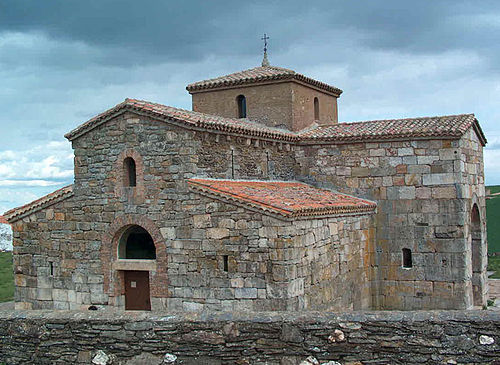
The traditional interpretation is that the church foundation goes back to the reign of Egica in the seventh century, having been built between 680 and before the Muslim conquest of Hispania in 711; San Pedro de la Nave would thus be one of the last works of Visigothic architecture.
The church's first design corresponded to a Roman cross in plan, although later two lateral naves were added, which gave it a hybrid shape between basilical and cruciform. It also has five rooms, two on each side of the Presbytery, that must have served as hermits' cells. In sum a rectangular plan of approximately 5.6 by 2.1 meters is established, from which eight chapels project: the rectangular central apsidal chapel and two others at the ends of the transept. The central nave, as is usually the case, is taller and wider than the aisles and is separated from them by arches supported by strong pillars.
The roof of the church is supported by a barrel vault, but while the vault of the nave and the aisles retains its original stone structure, the western sections of the building are vaulted in brick from the earlier springing points of the ashlar masonry. The arches used are of the horseshoe type…
Closest places in our Spain guide.
More places to explore in Spain.


