Ireland
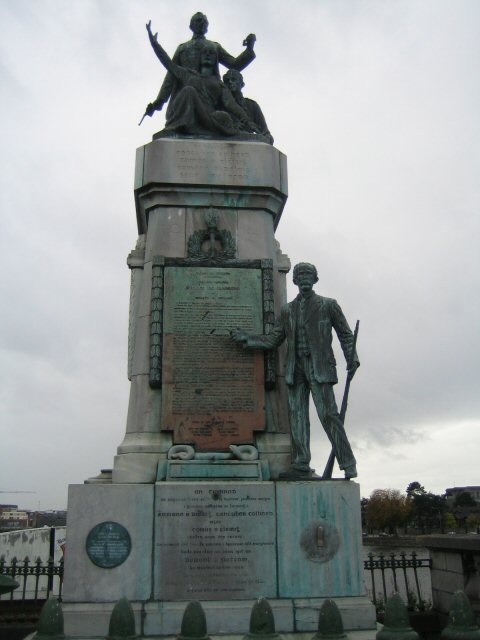
Monument to Christopher Columbus
Monument · Galway
City museum

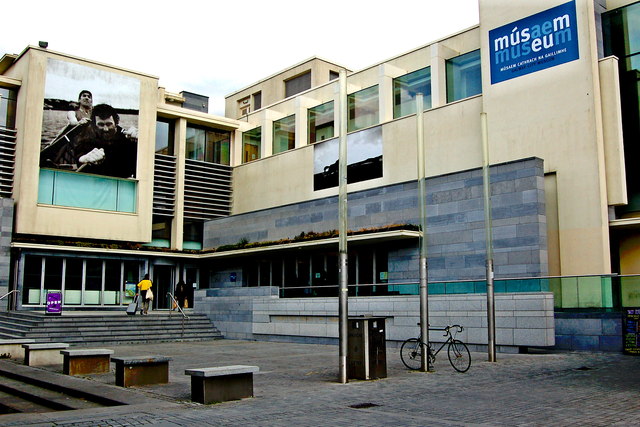
Galway City Museum (Irish: Músaem Cathrach na Gaillimhe, IPA:[ˈmˠuːsˠeːmʲˈkahɾˠəxˈnˠaˈɡal̪ʲəvʲə]) is a museum in Galway City, County Galway, Ireland. It was founded on 29 July 2006, and is located beside the Spanish Arch.
Galway City Museum was founded in 1976. It was originally located in Comerford House, which prior to this had been the home of artist Clare Sheridan. The museum began as a residual collection of medieval stones from the city, acquired by Sheridan. Curated by Etienne Ryan, Michael Keaney, Bill Scanlan and Jim Higgins the museum built up a general folklife, industrial and militia collection.
Comerford House is a historic property that was donated to the Galway City Council by the Comerford family for the intention of community care and purpose. The house was built c. 1800 as a private house, originally lived in by the Comerford family and later by the Greenwood family. Clare Consuelo Sheridan (1885–1970), sculptor, journalist, writer and first cousin of Sir Winston Churchill, lived at Comerford House between the years 1948 and 1954.
The building became part of Galway Corporation's administration offices for a period, before Galway City Museum was founded in 1976. This museum closed in 2004.
In April 2007 a new purpose built museum building was opened, behind the site of the old museum at Comerford House. The new Galway City Museum project was the initiative of Galway City Council to advance the cultural and heritage life of Galway City. The building was designed by Ciaran O’Connor and Ger Harvey, architects with the Office of Public Works, who were contracted by the Galway City Council. The new museum is located along the River Corrib beside the Spanish Arch, a protected monument which formed part of the defensive medieval wall that once surrounded the city of Galway. The design of the building creates a plaza or square between the museum and the Spanish Arch; a public space which is at times used for civic events.

The plan of the museum is composed in an 'L' shape and was restricted to three levels in order to maintain the scale of the surrounding buildings. The project was completed in 2006 and resulted in a space of 2,100 metres squared with a final cost of €6,890,000. The architects of the building won the Bank of Ireland Opus Architectural Award for their design in 2006.
Galway City Museum was founded in 1976. It was originally located in Comerford House, which prior to this had been the home of artist Clare Sheridan. The museum began as a residual collection of medieval stones from the city, acquired by Sheridan. Curated by Etienne Ryan, Michael Keaney, Bill Scanlan and Jim Higgins the museum built up a general folklife, industrial and militia collection.
Comerford House is a historic property that was donated to the Galway City Council by the Comerford family for the intention of community care and purpose. The house was built c. 1800 as a private house, originally lived in by the Comerford family and later by the Greenwood family. Clare Consuelo Sheridan (1885–1970), sculptor, journalist, writer and first cousin of Sir Winston Churchill, lived at Comerford House between the years 1948 and 1954.
The building became part of Galway Corporation's administration offices for a period, before Galway City Museum was founded in 1976. This museum closed in 2004.
is a historic property that was donated to the Galway City Council by the Comerford family for the intention of community care and purpose. The house was built c. 1800 as a private house, originally lived in by the Comerford family and later by the Greenwood family. Clare Consuelo Sheridan (1885–1970), sculptor, journalist, writer and first cousin of Sir Winston Churchill, lived at Comerford House between the years 1948 and 1954.

The building became part of Galway Corporation's administration offices for a period, before Galway City Museum was founded in 1976. This museum closed in 2004.
In April 2007 a new purpose built museum building was opened, behind the site of the old museum at Comerford House. The new Galway City Museum project was the initiative of Galway City Council to advance the cultural and heritage life of Galway City. The building was designed by Ciaran O’Connor and Ger Harvey, architects with the Office of Public Works, who were contracted by the Galway City Council. The new museum is located along the River Corrib beside the Spanish Arch, a protected monument which formed part of the defensive medieval wall that once surrounded the city of Galway. The design of the building creates a plaza or square between the museum and the Spanish Arch; a public space which is at times used for civic events.
The plan of the museum is composed in an 'L' shape and was restricted to three levels in order to maintain the scale of the surrounding buildings. The project was completed in 2006 and resulted in a space of 2,100 metres squared with a final cost of €6,890,000. The architects of the building won the Bank of Ireland Opus Architectural Award for their design in 2006.
Galway City Museum collects, preserves and displays materials relating to the history of Galway City; Archaeology, Art, Geology, Natural History, Social, Political and Industrial History and Folklife. The museum began as a collection of medieval stones acquired by artist Claire Sheridan of Comerford House and, over the years expanded to include general folk life, industrial and militia objects.
In April 2007 the new purpose built museum building was opened, located behind the site of Comerford House. The new building houses the collections of the previous city museum, as well as objects acquired for the new facility, although the majority of the collection is that which was inherited from Comerford House. The Comerford House collection includes almost 1,000 objects relating to various periods in history, collected over a period of about thirty years.
- DJ Murphy Collection : Consists of over three hundred mainly farm and industrial implements, mainly from Galway County. The collection also includes some rare straw items objects relating to traditional Irish rural life
- Medieval Stone Collection : Various carvings and architectural fragments which date mainly to the 16th and 17th century Galway City. It includes chimney pieces, corbels, armorial plaques and heraldic panels. The collection also includes two complete fireplaces and the Atty Doorway dating to 1577.
One of the fireplaces dates to 1615 and is from the Slate House Nunery, Kirwins Lane. The second, also from the 17th century, bears the arms from the Lynch and Henry families and originates from a house in High Street. Many pieces in this collection pertain to buildings which are no longer in existence and are associated with families of the Tribes of Galway.
- Galway Militia Artefacts : Objects relating to the Connaught Rangers, which belonged to Galwegians who fought in various wars, from the Crimea War to the First and Second World Wars.
- Claddagh Collection : A collection relating to the history of the Claddagh, in particular the Claddagh apron and shawl. It also includes a model of the layout of the Claddagh village in the early 20th century.
Closest places in our Ireland guide.
More places to explore in Ireland.