
Spain
Church of Santiago de los Caballeros, Galdar
Church building · Gáldar
Monument
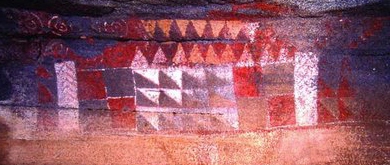
The Painted cave is an archaeological museum and park in the town of Galdar, located the northwest of Grand Canary in the Canary Islands, Spain. This centre is part of the Spanish Ministry of Culture, Historic Heritage and Museums of the town council of Grand Canary. Inside are found some of the most representative archaeological vestiges of pre-Hispanic Canaries, with characteristics unique within Spain. The Painted cave is considered as the "Sistine chapel" of the former inhabitants of the island, the Canarii.
The Painted cave is located at nº 2 Audiencia street, in the centre of Gáldar, 27 km west of Las Palmas and 50 km N-W of the international airport of Gran Canaria.
The cave was discovered in 1862 on the occasion of agricultural works, through a hole in its roof. The "official discovery" had to wait until 1873, when José Ramos Orihuela visited the cave.
In 1876, Gregorio Chil y Naranjo briefly mentions the cave in his " Studies ".
In 1882 Diego Ripoche visited the cave and made drawings, some of which he may have sent to René Verneau. He also noted the presence of corpses, pots and other utensils.
In 1884, Olivia Stone visited the cave, made some drawings, wrote about it and suggested that the local government should acquire the site and take proper care of it.
In 1887, French anthropologist René Verneau visited the cave. He wrote a detailed description in which he mentions the careful execution of each painted panel.
The end of the 19th century is noted for a revival in the awareness of the importance of conservation issues for historical works. In the El Museo Canario review, chronicler Batllori y Lorenzo writes " Mi última tentativa ", a solemn appeal for the protection of the cave. Critics of the institutions' lack of action in that direction continue into the 20th century. But only in 1967 starts a public campaign in favour of the cave's protection - counting among its supporters Celso Martín de Guzmán and Elías Serra Ráfols.
Meanwhile, the paintings were deteriorating. In 1970 the General commission of archaeological excavations (" Comisaría General de Excavaciones Arqueológicas ") started working on the protection of the cave, notably on the humidity that was causing much damage. This was completed with the construction of an enclosure to protect the cave - and the public. In 1972 the site was declared Monument historique artistique.
Antonio Beltrán and José Miguel Alzola realized the first systematic study, published in 1974 with the first colour photographies and the most exact drawings to that date. This was another big step into spreading the knowledge of the existence of the cave among the specialists. It also helped determine the deterioration of the paintings. The plantations being watered nearby, the inadequate protection of the enclosure, the absence of planning for the visits, the chemical soil treatments for agricultural purposes and the inadequate ventilation of the premises were the main factors in increasing temperature and humidity in the cave and the subsequent damage on the paintings. Expropriation procedures were then started regarding the cultivated nearby land, and the site was closed to the public in October 1982.
The Painted cave museum and archaeological park of Galdar was reopened on 26 July 2006, after 24 years excavating and restoring the site, and fitting it for public visits without further endangerment of the paintings and other historic items. Up to then it was only possible to see a reproduction of the paintings in the Canary Museum of Las Palmas in Gran Canaria. Entry is open from 10 a.m. to 6 p.m. All visits are accompanied with a guide and must be booked. Four languages are available.
In 2016 the museum celebrated its 10th anniversary by sharing an exchange with the cave of Altamira museum - each museum lending to the other tens of its most valuable pieces.
The cave is a superb example of artistic representations of the ancient natives of Gran Canaria. It and the village next to it are located in the town that used to be the capital of the island in pre-Hispanic times.
Excavated by humans in volcanic material, its walls are decorated with geometrical patterns. The archaeologists think that, due to their regular distribution (usually in series of twelve), they could be a sort of calendar.
It is also the only location on Gran Canaria that brought the proof of the existence of common wheat on the island ( triticum aestivum or triticum durum, as it is difficult to tell the difference from the seed grain). Note that Grand Canary is the only Canarian Island to have painted caves.
The site also bears remains of houses, in which have been found various utensils. The collection counts among other items some notable locally made decorated ceramic pots and paintings. It also include some ceramics made on pottery wheel on the continent as well as coins, swords, horseshoes, nails, everyday use items (thimbles, knives, etc.). Most coins are from the 15th and 16th centuries. It seems that all metal items were imported.
Some pots are large and were used for storage; others were used for cooking. The local pottery was hand-made, with many of them presenting a finely polished surface and decorated with paint, generally ochre red applied before firing them in a hole in the ground. Some pots are entirely covered with geometrical patterns, in some cases including the bottom of the pots. Note that Gran Canaria is the only Canary island where painted pottery has been found.
Beside these, are some fired clay statues of idols with human and animal figures. Most of the human idols are feminine and many are associated with maternity. In some cases the statues' bodies have been decorated with red paint and some incisions mark the hair. These could be simple offerings, amulets or toys.
There are needles, stamps and spatulas made of sheep or goat bones; the needles are related to the making of leather clothes; the stamps and spatulas were pottery tools.
Objects made of stone have also been found. The stones most used are basalts, phonolites and obsidians. The stones were worked to create sharp edges with which to work other raw materials (wood, bone, skin/leather) or to carry out other works such as meat cutting or food preparation. Basalt was also used to make mortars, some round and some of elongated shapes. Some round mortars were used to grind grain for flour, some others for the red ochre that was used for the paintings and to decorate the pots.
Closest places in our Spain guide.
More places to explore in Spain.


