_(5052884b1).jpg?width=1200)
Australia
Christ Church Cathedral, Grafton
Anglican or Episcopal cathedral · New South Wales
Theater building

Saraton Theatre is a heritage-listed theatre at 95 Prince Street, Grafton, Clarence Valley Council, New South Wales, Australia. It now operates both as a cinema and a venue for live performances. The original 1926 building was designed by F. J. Board and built by J. Walters, while the 1940 interior was designed by George Rae and built by Goddard & Goddard. The property is owned by Notaras Bros Entertainment Pty Ltd. It was added to the New South Wales State Heritage Register on 9 June 2000.
- 1905: John (Ioannis) Notaras arrived from the island of Kythera (Greece) and joined his father who conducted a food retail shop.
- 1908: Tony (Anthony) Notaras arrived from Kythera and joined his brother and father.
- 1926: Saraton Theatre is opened by the Mayor, Ald. W. T. Robinson, on 17 July. He praises the Notaras brothers by saying that the occasion only went to show that there were at least some men in this district who appreciate its value and were prepared to put in all they could to make it a better place to live in. He hoped it would be an example to many others who were reluctant to spend their money on progressive ventures to make this part of the State more attractive from the point of view of up-to-date institutions.
- 1932: A fire on the stage on 20 August damaged the floor, roof of the stage, (loudspeaker?) baffle board, screen and curtains.

- 1932: 18 November. T. J. Dorgan conducted the theatre, but it was not being used at the time.
- 1933: The theatre was still not used as a cinema, but dances and socials were being held in it.
- 1935: By 20 June a sound screen had been installed (following the fire of 1932), and the equipment in use was made by RCA (Radio Corporation of America).
- 1938/9: No films were believed to be shown, but the theatre was used for dances, concerts, and social functions.
- 1939: On 3 September, World War II was declared. [ citation needed ]
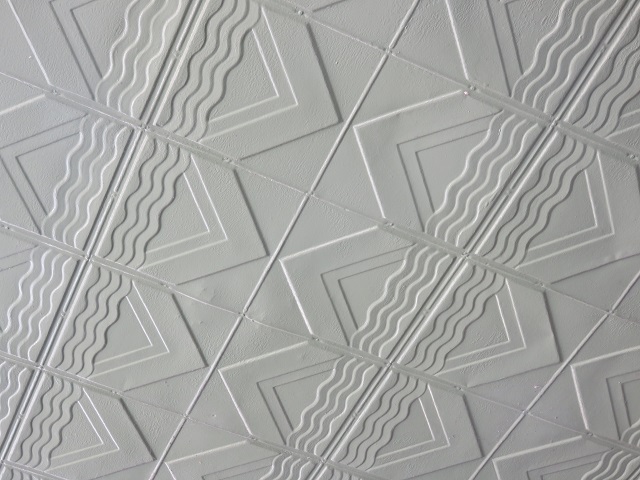
- 1940: The interior is completely remodelled to produce an ultra modern luxury theatre, on the lines of the metropolitan picture shows, with a glittering foyer laid down in rich pile carpets, and the decorative and lighting scheme blends harmoniously in cream and green, with a touch of blue and gold, while the stage is draped in gorgeous curtains, and fluted columns and frescoes give a finishing touch to a splendid interior. A detailed description of the decorative colour scheme and lighting is given in the same newspaper for 6 July 1940. It notes also that the cost was almost £4000. The architect was George Rae, from Brisbane. The opening ceremony was performed by Sir Earle Page, MHR, who congratulated T.J. Dorgan Pty Ltd and Messrs Notaras Bros on their enterprise. He emphasised how important it was to provide entertainment during times of war. Although World War II had only been progressing for less than one year, Page gave three principles on how to win the war: The third and most important [principle]of all is to keep up the spirit of the people. Men and women are better able to work hard and continuously if they are entertained. At the front in the last war [World War I] we found the lighter side relieved the tension, kept the men's nerves from snapping. I am sure that in these times we will think clearly, work better, plan straighter if we mix work with amusement, and therefore I am glad to open this place of entertainment
- 1944: On 10 May another fire occurred on the stage. The screen had to be replaced, as also was the curtains.
- 1951: New South Wales has 295 country towns containing 385 enclosed picture theatres
- 1955: A Brakelite plastic, wide screen, suitable for Cinemascope presentation, was installed on 27 April.
- 1963: The year by which television had arrived at most of the country areas. Around this time or just after, T. G. Dorgan closed the Saraton.

- 1982: 10 December. The Saraton is reopened after the auditorium has been repainted, and general refurbishment.
- 1989: On 13 January a fire, allegedly caused by an employee, destroyed the equipment in the projection box. Awaiting repairs and purchase of new equipment, films were temporarily shown in 16 mm from the front of the dress circle, commencing on 26 January. Since that fire projection of films (on a 35 mm projector with continuous platter system of feeding film) has continued.
- 1999: New South Wales country towns have only 13 picture theatres still operating in recognisable condition out of the 385 that were operating in 1951. The Saraton is one of those thirteen.
T. J. Dorgan conducted a small independent chain of picture theatres in the north-east towns of the state. It appears that he quite ruthlessly maintained his territory. One single-cinema operator who opened in opposition to Dorgan in Lismore explained how he had been squeezed out and closed down by, he claimed, T. J. Dorgan. Dorgan, he alleged, colluded with the film distributors to restrict product to the newcomer. Dorgan appeared to pursue similar business methods to those then conducted by the major exhibitors. They would arrange to lease an opposition theatre when the former operators were forced to close, either because of a price-war or of an inability to obtain films. They might then close it down, leaving it on hold for future use if demand, in their view, warranted its reopening.
This may be what happened to the Saraton. The timber building known as the Fitzroy Theatre opened as a skating rink (1889), was converted to a cinema in 1924 but the license was temporarily revoked in 1928 and it finally closed as a cinema late in the 1930s. Perhaps the Notaras Brothers attempted to beat Dorgan at his own game because, as well as building the Saraton, they gained control of the Fitzroy in the early 1930s. But both were leased to Dorgan who had also operated the Kinema (licensed in 1913). In a booklet on Grafton, published in 1931 (in possession of the Grafton Historical Society), Dorgan advertised that he controlled the Saraton, the Fitzroy, the Garden Theatre and the Prince Edward at South Grafton. It was only after the closure of the Fitzroy that Dorgan perhaps decided to reopen the Saraton, it also being the only well-built substantial theatre in town suitable for upgrading into a first class venue. It was Dorgan's architect who was selected to design the complete doing-over of the interior of the Saraton.
Closest places in our Australia guide.
More places to explore in Australia.


.jpg?width=1200)
.jpg?width=1200)
.jpg?width=1200)


