Germany
Soltau Toy Museum
Toy museum · Soltau
Urban municipality in Germany

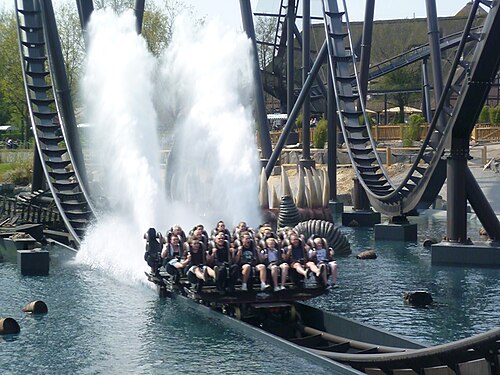
Soltau (German pronunciation: [ˈzɔltaʊ] ) is a mid-sized town in the Lüneburg Heath in the district of Heidekreis, in Lower Saxony, Germany. It has around 22,000 inhabitants. The city is centrally located in the Lüneburg Heath and is known nationwide especially for its tourist attractions like the Heide-Park and the Soltau-Therme.
The name Soltau comes from Solt (salt) and au (meadow).
Soltau lies between Bremen, Hamburg and Hanover in the Lüneburg Heath on the rivers Soltau and Böhme.
The municipality of Soltau has 16 Stadtteile (population in brackets as at 1 July 2003):
Soltau lies between Bremen, Hamburg and Hanover in the Lüneburg Heath on the rivers Soltau and Böhme.
The municipality of Soltau has 16 Stadtteile (population in brackets as at 1 July 2003):
The region of the Lüneburg Heath had already been settled by the start of the New Stone Age about 4,000 years ago. The Soltau area was initially occupied by a few individual farms. The parish of Soltau was probably founded around 830 and the first wooden church Sante Johannis Baptista (St. John the Baptist) was built.
The first written record of Soltau was in the year 936 as Curtis Salta ("farm on the salt meadow"). King Otto the Great granted the estate to Quedlinburg Abbey. Within a span of almost 600 years the village of Soltouwe emerged from Curtis Salta. It was located in the area between St. John's Church and the Waldmühle mill.
In 1304 the Vogtei of Soltau was sold to the cathedral chapter of Verden. Between 1383 and 1388 the village was established by order of the duke as protection against robber barons at the confluence of the rivers Böhme and Soltau near Hagen and Burg, which today is in the town centre. Subsequently, it was decided to demolish the castle there as part of the peace treaty at the end of the Lüneburg War of Succession ; at the same time Soltau was given town rights on 15 July 1388 by way of compensation. In 1400 the letters patent for the guild was issued, which entitled the town to trade. In 1440 another letters patent was specifically conferred on blacksmiths, tailors, cobblers, linen and cloth-makers.
The consequences of the war of succession in Soltau can clearly be traced and prevented the rapid growth of the new town; conditions were miserable and many farms were ruined. Moreover, Soltau was a long way from the centres of power, so did not receive much direct support and there were no local lords who felt an association with it. [ citation needed ]
In 1479 Soltau became part of the Duchy of Brunswick-Lüneburg and an Amtsvogtei was established. In 1511 the town was totally destroyed by fire.
The last known cavalry battle took place in June 1519 on the 'Wiehe Holt' near Soltau and is known as the Battle of Soltau, which represented the high point of the Hildesheim Abbey Feud. According to long tradition it was only thanks to a ruse by the Soltau townsman, Harm Tyding, who pretended to the advancing Brunswick troops that he knew the whereabouts of a large Lüneburg army and led them on a detour, that the town was not destroyed again.
The Reformation saw little conflict in Soltau as a result of the firm stand taken by the Lüneburg duke, Ernest I and his commitment to introducing the Protestant-Lutheran faith in 1527.
In 1533 the town hall was established in an old chapel in Marktstraße but it was destroyed in a fire. In 1567 another great fire destroyed large parts of the town. In 1588 the first school building was erected, although the first records of school teaching go back to as early as 1563. The plague raged in 1626 and the population dwindled dramatically. Before 1620 there were several years of legal disputes about the acquisition of building land outside the town wall.
In the Thirty Years' War Soltau was once again entirely destroyed. All that remained was a great ruin in the landscape and only one building from that time remains. It was a long time before the town recovered from the war's consequences. The traces of the war and the area's occupation by Swedish troops, which began in 1632, is still documented today by the Ellinger Grenzstein ("Ellingen Boundary Stone").
Market rights and therefore the right to host two fairs a year and a horse market were conferred in 1668. The Old Town Pharmacy ( Alte Stadtapotheke ) was opened in 1796, the first chemist in Soltau.
Soltau first became a garrison town in 1712, a year when the first cloth factory was built. Napoleonic troops occupied the town in 1803 and turned it into a French border town for the Kingdom of Westphalia in 1810. Soltau belonged to the Canton of Harburg in the Department of Bouches-de-l'Elbe. In 1813 the Lützow infantry and cossacks ended ten years of occupation. In 1826 the Old Town Hall ( Altes Rathaus ) was built on Poststraße.
In 1873 the first railway through Soltau was opened, the line which linked Bremen and Berlin. It was followed in 1901 by the Heath Railway between Hamburg and Hanover and, in 1912, the lines of the East Hanoverian Railways to Celle and Lüneburg. In 1885 Soltau became a district town ( Kreisstadt ). In 1896 the gas works was built and, two years later, the gymnasium and shooting hall.
On Christmas Eve 1906 a fire destroyed St. John's Church which had been mentioned in the records since 1464. It was then rebuilt and is still standing today. In 1911 the Lutheran Church was consecrated, the second Protestant church to be founded, and in 1915 the Catholic Church of St. Mary's followed. A royal officers' riding school was founded in 1913.
Soltau Camp ( Lager Soltau ), the largest German prisoner-of-war camp of the First World War was built in 1914. In the same year the mining of potassium salts ( Kalisalz ) began at the Heinrichssegen Shaft; it had to be halted only four years later as a result of the war, after having reached a depth of just six metres. From 1934 several Wehrmacht units were quartered at Wolterdingen Camp ( Lager Wolterdingen ) and after the end of the Second World War it was used to house refugees and forced labourers until about 1960. In April 1945, the town was partly destroyed by air raids, in which there were many more civilian victims than military ones.
Closest places in our Germany guide.
More places to explore in Germany.