Germany
Büraburg
Archaeological site · Fritzlar
Town
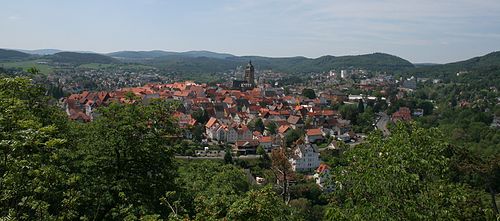
Bad Wildungen (German pronunciation: [baːt ˈvɪldʊŋən] ) is a state-run spa and a small town in Waldeck-Frankenberg district in Hesse, Germany. It is located on the German Timber-Frame Road.
Bad Wildungen lies in the eastern foothills of the Kellerwald range in the so-called Waldeck holiday region, 11 km west of Fritzlar, and 35 km southwest of Kassel. The town, which spreads out east of the Homberg, is crossed by the river Wilde, which empties into the Eder at the constituent municipality of Wega. The constituent municipalities of Wega and Mandern lie on the Eder, on which also lies the Edersee, a reservoir lying only about 10 km northwest (in a straight line) of the main town of Bad Wildungen. The river Urff flows through the southwest constituent municipalities of Hundsdorf, Armsfeld and Bergfreiheit.
The nearest large towns are Kassel (about 35 km; northeast), Marburg (about 60 km; southwest) and Korbach (about 28 km; northwest).
Bad Wildungen borders in the north on the municipality of Edertal (Waldeck-Frankenberg), in the east on the town of Fritzlar, in the southeast on the town of Bad Zwesten (both in the Schwalm-Eder-Kreis ), in the south on the municipality of Haina, and in the west on the town of Frankenau (both in Waldeck-Frankenberg).
Besides the main town, which bears the same name as the whole, the town of Bad Wildungen consists of the centres of Albertshausen, Armsfeld, Bergfreiheit, Braunau, Frebershausen, Hüddingen, Hundsdorf, Mandern, Odershausen, Reinhardshausen and Wega.

Bad Wildungen lies in the eastern foothills of the Kellerwald range in the so-called Waldeck holiday region, 11 km west of Fritzlar, and 35 km southwest of Kassel. The town, which spreads out east of the Homberg, is crossed by the river Wilde, which empties into the Eder at the constituent municipality of Wega. The constituent municipalities of Wega and Mandern lie on the Eder, on which also lies the Edersee, a reservoir lying only about 10 km northwest (in a straight line) of the main town of Bad Wildungen. The river Urff flows through the southwest constituent municipalities of Hundsdorf, Armsfeld and Bergfreiheit.
The nearest large towns are Kassel (about 35 km; northeast), Marburg (about 60 km; southwest) and Korbach (about 28 km; northwest).
Bad Wildungen borders in the north on the municipality of Edertal (Waldeck-Frankenberg), in the east on the town of Fritzlar, in the southeast on the town of Bad Zwesten (both in the Schwalm-Eder-Kreis ), in the south on the municipality of Haina, and in the west on the town of Frankenau (both in Waldeck-Frankenberg).
Besides the main town, which bears the same name as the whole, the town of Bad Wildungen consists of the centres of Albertshausen, Armsfeld, Bergfreiheit, Braunau, Frebershausen, Hüddingen, Hundsdorf, Mandern, Odershausen, Reinhardshausen and Wega.
Bad Wildungen's first documentary mention came about 800 AD from the Hersfeld Monastery 's goods directory under the Latin name " villa Wildungun ". This place lay in the Wilde Valley, east of today's main town. About 1200, a castle was built by the Thuringian Landgraves, around which Alt-Wildungen ("High Wildungen") (from lat. altus = high) developed. In 1242, Nieder-Wildungen ("Lower Wildungen"), which had been founded on the hill facing the castle, was granted town rights. From 1263, the castle and the two Wildungen towns were owned by the Counts – later Princes – of Waldeck, who only abdicated after the First World War ( see Principality of Waldeck ). In 1358, the two Wildungen towns were mentioned.

In 1906, the town of Nieder-Wildungen was given the new name Bad Wildungen because of its bath. In 1940, Bad Wildungen was given the title of "Preußisches Staatsbad" ("Prussian State Bath").
According to the documentary "The End of the War in Colour", Bad Wildungen was one of the rare smattering of German towns that survived WWII relatively unscathed.
In the time when alleged witches were persecuted, 78 people in Bad Wildungen fell victim to witch trials. At the time, Wildungen had 1200 inhabitants. The persecution came in waves of trials: 1532, 1629 to 1631 and 1650 to 1664.
- 1532 First witch trial against Gertraud Muck
- 1630 Maria Rörig steadfastly withstood torture from September 1630 to May 1631: "Dear God received her in prison, to Him she would remain faithful, she is innocent like Jesus Christ." Count Christian ordered her release.

- 1656 Trial against Susanne Weber (Maria Rörig's daughter): "Her husband asks that the trial be sped up owing to the costs."
The neighbouring municipalities of Alt-Wildungen, Reitzenhagen and Reinhardshausen were amalgamated in 1940. As part of municipal reform, the same was done in 1971 with Albertshausen, Armsfeld, Bergfreiheit, Braunau, Frebershausen, Hüddingen, Hundsdorf, Mandern, Odershausen and Wega.
In the time when alleged witches were persecuted, 78 people in Bad Wildungen fell victim to witch trials. At the time, Wildungen had 1200 inhabitants. The persecution came in waves of trials: 1532, 1629 to 1631 and 1650 to 1664.
- 1532 First witch trial against Gertraud Muck
- 1630 Maria Rörig steadfastly withstood torture from September 1630 to May 1631: "Dear God received her in prison, to Him she would remain faithful, she is innocent like Jesus Christ." Count Christian ordered her release.
Closest places in our Germany guide.
More places to explore in Germany.