
Australia
Perth House
Heritage site · New South Wales
Military museum

The New South Wales Lancers Memorial Museum is a military museum at Linden House, 2 Smith Street, Parramatta, Sydney, Australia. The museum's collection is heritage-listed, having been added to the New South Wales State Heritage Register on 14 May 2010.
The 1st/15th Royal NSW Lancers Museum was established at the Parramatta Lancer Barracks in 1958. The main purpose of the museum is to collect and preserve relics, artefacts and records that tell the story of the Royal NSW Lancers, their predecessors (i.e. NSW Cavalry Reserves, Sydney Lancers, NSW Cavalry Regiment, NSW Lancers, 1st Light Horse Regiment AIF, and 1st Armoured Regiment 2nd AIF) and their successors. The museum also collects and preserves relics, artefacts and records of other Light Horse Regiments and the Royal Australian Armoured Corps.
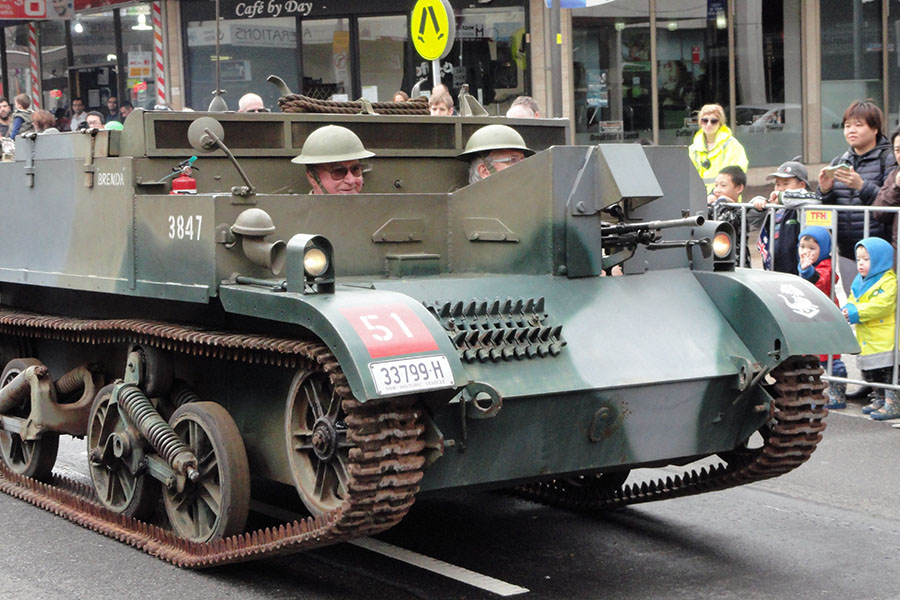
The collection comprises over 7,000 items, including many of international or national heritage significance. It is now the only official military museum in New South Wales or the ACT, committed to restoring and maintaining its fleet of heritage military vehicles in full running order. These include a working example of the first armoured fighting vehicle used by the regiment in WWII, the Bren Gun Carrier. Most young Australian volunteers who were destined to join the new armoured regiments, hurriedly being formed in Australia as the Japanese entered the war and moved to threaten the country, trained on these carriers while waiting for the arrival of Matilda Tanks from England. The heritage vehicle fleet also includes the internationally acclaimed Matilda Tank named ACE, the first tank off the landing craft at Australia's largest ever armoured assault, carried out by the Lancers (then known as the 1st Armoured Regiment (AIF) (RNSWL) at Balikpapan, on the island then known as Borneo, in July 1945. Left to rot in a paddock in the NSW Southern Highlands for over 50 years, when eventually recovered by museum volunteers, the consensus of opinion was that it could never be restored. After six years, the expenditure of $100,000 and over 30,000 volunteer hours, ACE is back to the condition in which its wartime crew would have fought in it, on permanent public display at Lancer Barracks where it can sometimes be heard and seen starting its engines and driving around and available for public events. It has been awarded a coveted National Trust conservation award, and has been described as a unique restoration project representing cutting edge restoration. It is the only British or Commonwealth armoured fighting vehicle to have seen active service in any theatre of World War II, to have been restored to full mobility and returned to its wartime fighting unit, let alone restored by retired volunteers from that unit. [ self-published source? ]
Until the creation of the regular Australian Army in 1948, the regiment was the Vice-Regal Escort, providing the mounted escort for the Governors of NSW and, after Federation, the Governors-General of Australia, on all major public events, such as the opening of the first Parliament of Australia and of the opening of the Sydney Harbour Bridge. The whole collection therefore traces the active, ceremonial and peacetime service history, both at home and overseas, of the 1st/15th Royal NSW Lancers Regiment, from its inception in 1885 through to the present day. [ self-published source? ] The 1st/15th Royal NSW Lancers is Australia's oldest and most highly decorated Regiment.
Formation of Regiment and Occupation of Parramatta Barracks
The beginnings of the regiment date from 1885 when the then Governor gave approval for the formation of a volunteer cavalry corps in Sydney known as the Sydney Light Horse Volunteers. Within that same year the Sydney Light Horse Volunteers were converted to the Sydney Lancers. The formation of the Sydney Lancers encouraged the formation of other light horse troops in country NSW and by 1886 the cavalry reserves comprised eight troops of light horse. In 1889 the light horse troops were reorganised into an integrated regiment known as the NSW Cavalry Regiment. Historic Parramatta Barracks became the Regimental Headquarters of the NSW Lancers in 1897. The Lancers have occupied the Barracks from 1897 through to the present day and consequently, are nicknamed the Parramatta Lancers. The regiment was granted the title "Royal" in 1935.
The Evolution from Horse Mounted Lancers to Modern, Heavy-armoured Vehicles
In the years leading up to WWII the cavalry was converted into motorised machine gun regiments and the NSW Lancers were one of the first Regiments to give up their horses. The regiment was armed with Vickers machine guns mounted on an assortment of small, privately owned motor-lorries. The idea of such a unit was totally new and the unit is believed to have been the first of its kind in the Empire. During WWII the regiment was incorporated into the newly formed 3rd Army Tank Brigade and designated as the 1st Australian Army Tank Battalion, later renamed the 1st Australian Armoured Regiment. The 1st Australian Armoured Regiment pioneered the use of the Matilda infantry tank in the jungle and formed part of what is to this day, Australia's largest ever armoured assault at Balikpapan, Borneo in 1945.
Today the regiment operates as light cavalry scouts equipped with light skin scout vehicles. The regiment's mission is to support the 51st Battalion, the Far North Queensland Regiment. 1st/15th Royal NSW Lancers Regiment Headquarters remains the Lancer Barracks at Parramatta.
The beginnings of the regiment date from 1885 when the then Governor gave approval for the formation of a volunteer cavalry corps in Sydney known as the Sydney Light Horse Volunteers. Within that same year the Sydney Light Horse Volunteers were converted to the Sydney Lancers. The formation of the Sydney Lancers encouraged the formation of other light horse troops in country NSW and by 1886 the cavalry reserves comprised eight troops of light horse. In 1889 the light horse troops were reorganised into an integrated regiment known as the NSW Cavalry Regiment. Historic Parramatta Barracks became the Regimental Headquarters of the NSW Lancers in 1897. The Lancers have occupied the Barracks from 1897 through to the present day and consequently, are nicknamed the Parramatta Lancers. The regiment was granted the title "Royal" in 1935.

In the years leading up to WWII the cavalry was converted into motorised machine gun regiments and the NSW Lancers were one of the first Regiments to give up their horses. The regiment was armed with Vickers machine guns mounted on an assortment of small, privately owned motor-lorries. The idea of such a unit was totally new and the unit is believed to have been the first of its kind in the Empire. During WWII the regiment was incorporated into the newly formed 3rd Army Tank Brigade and designated as the 1st Australian Army Tank Battalion, later renamed the 1st Australian Armoured Regiment. The 1st Australian Armoured Regiment pioneered the use of the Matilda infantry tank in the jungle and formed part of what is to this day, Australia's largest ever armoured assault at Balikpapan, Borneo in 1945.
Today the regiment operates as light cavalry scouts equipped with light skin scout vehicles. The regiment's mission is to support the 51st Battalion, the Far North Queensland Regiment. 1st/15th Royal NSW Lancers Regiment Headquarters remains the Lancer Barracks at Parramatta.
In 1885 the regiment, then the new formed Sydney Lancers, was designated as the NSW Vice Regal escort, a role the regiment continued to fulfil up until WWII. The regiment's first public appearance as the Vice Regal escort, occurred in 1885 when the regiment escorted the then Governor to farewell the NSW contingent to the Sudan. Other important ceremonial events attended by the regiment include: the opening of State and Federal Parliaments (including inaugural Federal parliament); inauguration of site of new Australian Capital, Canberra ; the opening of Sydney Harbour Bridge and the parade for the visit of the Great White Fleet to Australia in 1908. During this event the regiment mounted band followed by the regiment lead the parade in Centennial Park. In addition to ceremonial duties performed at home, detachments of the Lancers travelled to England in 1893 to form part of Queen Victoria 's escort for the opening the Imperial Institute. Detachments of the Lancers also formed part of the Queen's escort for the Diamond Jubilee celebrations in England in 1897.
The regiment was the first Colonial and therefore the first Australian troops to see active service in the Boer War (1889-1902). In WWI the regiment fought at Gallipoli as the famed 1st Light Horse and in Sinai and Palestine as part of the Desert Mounted Corps. During WWII the regiment saw active service in the Western Desert, Greece, Crete, New Guinea and Tarakan as the 2/2 Machine Gun Battalion and in New Guinea and Borneo as the 1st Australian Armoured Regiment.
In 1885 the regiment, then the new formed Sydney Lancers, was designated as the NSW Vice Regal escort, a role the regiment continued to fulfil up until WWII. The regiment's first public appearance as the Vice Regal escort, occurred in 1885 when the regiment escorted the then Governor to farewell the NSW contingent to the Sudan. Other important ceremonial events attended by the regiment include: the opening of State and Federal Parliaments (including inaugural Federal parliament); inauguration of site of new Australian Capital, Canberra ; the opening of Sydney Harbour Bridge and the parade for the visit of the Great White Fleet to Australia in 1908. During this event the regiment mounted band followed by the regiment lead the parade in Centennial Park. In addition to ceremonial duties performed at home, detachments of the Lancers travelled to England in 1893 to form part of Queen Victoria 's escort for the opening the Imperial Institute. Detachments of the Lancers also formed part of the Queen's escort for the Diamond Jubilee celebrations in England in 1897.

The regiment was the first Colonial and therefore the first Australian troops to see active service in the Boer War (1889-1902). In WWI the regiment fought at Gallipoli as the famed 1st Light Horse and in Sinai and Palestine as part of the Desert Mounted Corps. During WWII the regiment saw active service in the Western Desert, Greece, Crete, New Guinea and Tarakan as the 2/2 Machine Gun Battalion and in New Guinea and Borneo as the 1st Australian Armoured Regiment.
Origin of "1st" Designation and Grant of Title 'Royal'
As reserve units were not allowed to fight outside Australia, on the outbreak of both WWI and WWII, the Australian Government recruited a special force of volunteers, known respectively as the first and second Australian Imperial Force (AIF) units. In the case of the Lancers their officers and men formed the first ranks of the 1st Light Horse, 1st AIF. At the end of WWI and the disbandment of the AIF units, where possible the AIF units complete with battle honours were effectively folded back into their "parent" Australian Military Force (AMF) unit. After the close of WWI, the regiment which had been designated the 7th Light Horse (NSW Lancers) prior to WWI, was renamed the 1st Light Horse (NSW Lancers). A few years later, in 1921, the regiment was designated the 1st Light Horse Regiment (NSW Lancers). The regiment received the grant of the title "Royal" in 1935 and in the following year Regiment was renamed the 1st Light Horse (Machine Gun) Regiment (Royal NSW Lancers).
At the onset of WWII volunteers from the Lancers formed the 2nd Machine Gun Battalion, 2nd AIF. With the disbandment of AIF troops after the war the AIF unit, now known as the 1st Australian Armoured Tank Battalion (AIF) (Royal NSW Lancers), was folded back into its "parent" Australian Military Force unit the 1st Australian Motor Regiment (Royal NSW Lancers), a designation the regiment received in 1942. Post WWII the regiment was designated the 1st Armoured Regiment (Royal NSW Lancers) in 1948 and then in 1949 the 1st Royal NSW Lancers.
In 1956 the 15th Light Horse (Northern River Lancers) were disbanded. As the genesis of this regiment was one of the original troops of the NSW Cavalry Reserves, it was decided by military authorities that, like the 1st Light Horse, 1st AIF, the 15th Light Horse would be folded back into its "parent", hence the Lancers current name 1st/15th Royal NSW Lancers.
Closest places in our Australia guide.
More places to explore in Australia.


.jpg?width=1200)

.jpg?width=1200)


.jpg?width=1200)
.jpg?width=1200)
.jpg?width=1200)


