.jpg?width=1200)
Australia
Australian Reptile Park
Zoo · New South Wales
Park
.jpg?width=1200)
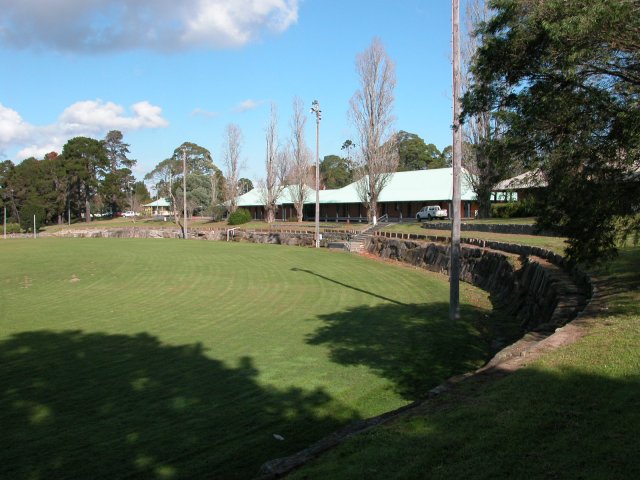
The Mount Penang Juvenile Justice Centre is a heritage-listed former juvenile detention centre, now a parkland and redevelopment precinct known as Mount Penang Parklands. It is situated on the Pacific Highway at Somersby, Central Coast, New South Wales, Australia. It was designed by James Nangle and built from 1912 by the New South Wales Public Works Department. It was also known as The Farm Home for Boys, Girrakool and Kariong Juvenile Detention Centre. It was added to the New South Wales State Heritage Register in September 2003. Today, Mount Penang Parklands is a redevelopment precinct containing parks and gardens, a high school, an events park, commercial and office space and residential development.
The area and surrounding Central Coast are the traditional lands of the Darkinjung language group of Aboriginal people. "Kariong" is said to be an Aboriginal word meaning "meeting place".
A 1994 Aboriginal sites study for the City of Gosford area included the Mount Penang site. Evidence of pre-European sites found are associated with the Hawkesbury Sandstone formations, being rock engravings, grinding groove sites and shelters with both art and occupation deposit. Common motifs found at rock engraving sites include, what appear to be kangaroos and marine animals such as whales, fish and eels. Human forms have also been recorded throughout the region. Some rock platforms contain many motifs, while other sites may only a small number of engraved figures.
European colonisation of the Gosford district began in the 1820s, with the main points of entry being Brisbane Water in the east and Mangrove Creek, a tributary of the Hawkesbury River, in the west. Most of the development subsequently occurred in the eastern or coastal sector.
Early settlement of the district can be divided into two phases:
- The pioneering era, 1821–31, when the district's resources were exploited and little development took place.
- The developing era, 1832–43, when considerable growth occurred in population and industry. In the 1830s, a government township was laid out at the head of Brisbane Water, on land between Erina and Narara Creeks. It was described as the township of Port Frederick, in honour of Frederick Hely, who was Superintendent of Convicts and had a large property on Narara Creek. When the survey plan was sent to Governor Gipps for approval, it was returned with the notation "to be called Gosford".
Early industry include timber getters (forest oak, ironbark and red cedar), lime burners (from shells from the many Aboriginal middens or large natural deposits around the shores) and ship builders of Brisbane Water. This activity continued into the 20th century. Early economic activity included small farms and grazing properties. Citrus orchards were planted on farms from 1880 where timber getters had cleared the land, and climate and soils were suitable. As roads were developed, farming spread to Somersby Plateau. In 1897, the district produced 3% of NSW's citrus crop, increasing to 21% by 1921 and 34% by 1928. Market gardens and passionfruit were also increasing in popularity.
Other early townships in the district were at East Gosford, Kincumber and Blackwall (near Woy Woy ), where the main shipbuilding yard was located. Until the 1880s the district's timber and other produce went to Sydney by boat, since few land routes were available.
The railway, which was completed in 1887, provided opportunities for commencement of tourist activities in the area. Large numbers of tourists used trains to travel to Woy Woy and Gosford for fishing, hunting and sight seeing trips. Guest houses were developed to accommodate this rising demand for overnight or holiday accommodation. Railway access encouraged other industries, including dairying in the districts around Wyong.

The Mount Penang Juvenile Justice Centre was the largest centre of its type in the Southern Hemisphere, accommodating 170 male juvenile offenders. The centre was set out on an open plan, with the detainees housed in dormitories and attending schooling and vocational technical training on site during the week. The principle of rehabilitation through the combination of education and physical labour is a doctrine that the centre had adopted throughout its history. Indeed, the initial building phase between 1912 and 1922 relied on the physical labour of the inmates for the construction of the centre's major buildings, many of which are still in use today.
The site maintains a link with the earliest days of juvenile reform in NSW when male offenders were housed on retired navy ships in Sydney Harbour and on work farms in the Sydney district. Some of the earliest buildings were designed to resemble lighthouse cottages, in keeping with the nautical background of the school. The centre also provides a tangible marker of the reform system for boys spanning most of the twentieth century.
In 1866, the Destitute Children Act, better known as the Industrial Schools Act was passed through the Parliament of New South Wales in an effort to control wayward or destitute children. The Act was initiated following the findings of an 1859 Select Committee on the condition of the working classes in Sydney. The committee estimated that there was up to 1,000 destitute children in Sydney alone, and recommended the establishment of reformatory schools to get them off the streets.
The schools were designed on Industrial Schools in England which removed children who were homeless, involved in crime or neglected in some way and place them in reformatories, separating them from the bad influences that they were under. Once "saved", the children could then be given a rudimentary education, taught the basics of a trade and be apprenticed out to start their lives as useful citizens.
A response to the 1866 Act was the establishment of the Nautical School Ships, the first of which was the Vernon. Encouraged by Henry Parkes, the then Premier of New South Wales the ex-navy sailing ship was converted into a training ship to house up to 500 boys. The Vernon was legally an Industrial School, and as such was intended to house children who had not been convicted of criminal offences, but were instead found to be destitute, neglected, or in moral danger.

No Reformatory School for young offenders, was created at the same time. As a result, it became common practice for children who were believed to have committed crimes to be sentenced by magistrates to the Vernon. The ships combined a system of education and military-style discipline, based on a reformist vision. Social philanthropists supported the principle of removing a child from a bad family environment in order to ensure the child's moral reform. From 1878 to 1895, military-style drills were introduced under the guidance of Superintendent Frederick William Neitenstein.
The days on board were divided in two, with lessons taking up one half of the day and drill taking up the other half. The boys were under constant supervision, with inspections being a means to ensure they stayed on the right path. The boys were further controlled through a class system of seven grades, with each grade carrying privileges and work routines. Boys worked on a marks system to advance to higher grades, receiving the extra privileges that went with them. By encouraging advancement, the system was designed to maintain discipline and ensure self-reliance, both seen as being essential to reform.
In 1890, the Sobraon, a second training ship built in 1866, replaced the Vernon. Both ships were anchored off Cockatoo Island in Sydney Harbour. The Sobraon remained there until 1911. Whilst moored off Cockatoo Island, the boys of the Vernon and the Sobraon maintained a small farm to supply themselves with fresh food, a tradition carried on at Mount Penang.
In 1905, the Neglected Children and Juvenile Offenders Act was passed to replace the former Industrial and Reformatory Schools Acts of 1866. The Gosford Farm Home for Boys was built under this new Act. In the early 1900s, the Government Surveyor recommended the Mount Penang site as a possible location for a Government sanatorium; however, this was never acted upon. During the same period, the Government looked for a site on which to construct a new centre for juvenile delinquents.
The new centre would be based on similar principles as the Brush Farm in Eastwood, where hard physical work and a basic school education would combine to assist in the rehabilitation of delinquent boys. The centre would also take the boys from the nautical training ships, which had become outdated and expensive to operate by the early 1900s.
Closest places in our Australia guide.
More places to explore in Australia.


.jpg?width=1200)
.jpg?width=1200)
.jpg?width=1200)
.jpg?width=1200)
.jpg?width=1200)
.jpg?width=1200)
.jpg?width=1200)


