Romania
Stadionul Municipal
Stadium · Miercurea Ciuc
Fortress
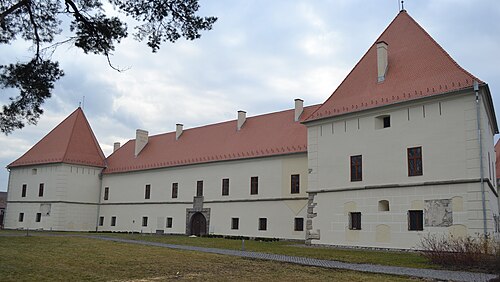
The Mikó Castle (Romanian: Castelul Mikó; Hungarian: Mikó-vár) is a fortified castle in Miercurea Ciuc (Csíkszereda), Romania. It is among the city's most important monuments, and today houses an ethnographic museum devoted to Székely heritage. Work on the castle, which is 75 m long and 70 m wide, began on 26 April 1623 and probably was completed in the 1630s.
In style, it resembles the castles at Iernut, Vințu de Jos and Lăzarea. It is named after Ferenc Mikó (1585–1635), who began building it a decade after becoming supreme captain of the Csíkszék (Ciuc), Gyergyószék (Gheorgheni) and Kászonszék (Caşin) Székely seats, later merged into Csík County. Documents of the time also refer to it as "Mikó's new citadel".
The first written document to mention the citadel dates to 1631. After Ferenc Mikó's heirs died prematurely, the citadel came into the possession of Tamás Damokos, supreme judge of Csíkszék. On 21 October 1661, Turkish and Tatar troops led by Ali, Ottoman pasha of Temeşvar Province, invaded Csíkszereda, occupying and burning the citadel.
It was rebuilt in 1714-16 under orders from Habsburg General Stephan Steinville, as attested by a stone inscription above the entrance gate...
Closest places in our Romania guide.
More places to explore in Romania.