Italy
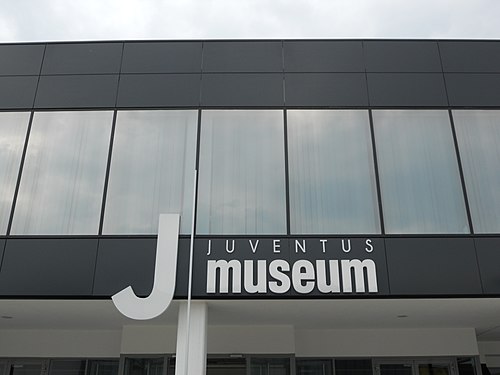
J-Museum
Sports museum · Turin
Tourist attraction

Juventus Stadium (Italian pronunciation: [juˈvɛntus ˈstaːdjum]), known for sponsorship reasons as the Allianz Stadium since July 2017, sometimes simply known in Italy as the Stadium (Italian: Lo Stadium), is an all-seater football stadium in the Vallette borough of Turin, Italy, and the home of Juventus. The stadium was built on the site of its former ground, the Stadio delle Alpi in the latter 2000s, and is the first club-owned football modern venue in the country. It is also one of only four stadiums in Italy accredited with the UEFA Category 4, which have the highest technical level in the confederation's Stadium Infrastructure Regulations, alongside the San Siro, the Stadio Olimpico di Roma and the Stadio Olimpico Grande Torino. It was opened at the start of the 2011–12 season and, with 41,689 spectators, it is the sixth largest football stadium in Italy by seating capacity, as well the first in Piedmont. The first football structure to be built in post-modern style and the first without architectural barriers in the country, Juventus played the first match in the stadium on 8 September 2011 against the world's oldest professional football club Notts County, in a friendly which...
Juventus' previous permanent home ground, the Stadio delle Alpi, was completed in 1990 to host matches for the 1990 World Cup. The club's move from their previous ancestral home, the Stadio Comunale, to the Stadio delle Alpi was controversial. The new stadium was built at a great expense, was relatively less accessible, and had poor sightlines due to the athletics track. Despite Juventus being the best-supported team in Italy (with the highest television subscribers and away section attendances), attendance at the Stadio delle Alpi was dismal. Average attendance was only a third of the stadium's 67,000 capacity. The club bought the stadium from the local council in 2002, a decision which was popular with fans. Antonio Giraudo, CEO of the Club between 1994 and 2006, committed the project to the architect Gino Zavanella; the initial project already included features that would be typical of the final version, such as nearly halving the oversized capacity of the Delle Alpi and the elimination of the athletics track.
Juventus moved out of the unpopular stadium after the 2006 Winter Olympics were held in the city and began plans to build a more intimate and atmospheric venue. During that period, they played their matches at the newly renovated Stadio Olimpico, which was also unpopular due to its low capacity. In November 2008, the club unveiled plans for a new 41,000-seater stadium on the site of the Stadio delle Alpi. The new stadium, built at a cost of €155 million, features modern executive boxes, among other new developments. The completion of Juventus Stadium made Juventus the only Serie A club to build and own their stadium at the time. Then-club chairman Giovanni Cobolli Gigli described the stadium as "a source of great pride".
The financing of the project was contributed by the advanced payment from Sportfive for €35 million, a loan of €50 million (later increased to €60 million) from Istituto per il Credito Sportivo, and a land sales to Nordiconad for €20.25 million.
The construction project aimed to ensure a low environmental impact of the work of the construction site via the use of advanced environmentally sustainable technologies. This stadium is constructed to reduce energy consumption from non-renewable energy sources by reducing waste and optimising the resources available. The stadium can produce the electricity it needs using solar energy captured through photovoltaic panels ; it produces warm water which heats rooms, changing rooms, kitchens and the football field through a network of district heating, heats hot water for the dressing rooms and kitchens of restaurants using solar thermal systems. These alternative energy sources are aimed at helping the stadium meet the criteria dictated by the Kyoto protocol by generating multiple results:
- Intensive exploitation of solar energy through solar tracker tools
- No production of chemical or acoustic emissions
- Reduction of at least 50% of water needed for irrigation of the field All the concrete from the old Stadio delle Alpi demolition has been separated and reused for the new building; other materials left have been divided into types, to be recycled, resold or reused throughout the new stadium's construction. The reinforced concrete used for the steps has been crushed down and reused as a supporting layer of the soil, with almost 40,000 m 3 (52,000 cu yd) of concrete put towards the construction of the new stadium's foundations. Around 6,000 tons of steel, aluminium and copper were recovered, the re-use of which provided savings of more than one million euros. The implementation of this sustainable construction policy has ensured a global savings of approximately €2.3 million.
Juventus signed an agreement with Sportfive Italia which gave the company "exclusive naming and partial promotional and sponsorship rights for the new stadium". In the agreement, Sportfive was given the rights to the name of the stadium from 2011 to 2023 for €75 million and to market the sky boxes and VIP seats.
Since 1 July 2017, the Juventus Stadium is known commercially as the Allianz Stadium (in Turin) until 30 June 2030.
One of the first sporting structures, as well as the first football ground, to be built in post-modern stile in the country, the opening ceremony of the stadium was held on 8 September 2011, with a friendly match against Notts County, chosen as Juventus' black and white stripes were inspired by County's jersey colours. The game ended 1–1 with goals from Luca Toni and Lee Hughes in the second half. In return, Notts County extended an invitation to Juventus for a return match at Meadow Lane in 2012 to celebrate County's 150th anniversary.
A panorama overview of the Juventus Stadium during its opening ceremony.
The construction project aimed to ensure a low environmental impact of the work of the construction site via the use of advanced environmentally sustainable technologies. This stadium is constructed to reduce energy consumption from non-renewable energy sources by reducing waste and optimising the resources available. The stadium can produce the electricity it needs using solar energy captured through photovoltaic panels ; it produces warm water which heats rooms, changing rooms, kitchens and the football field through a network of district heating, heats hot water for the dressing rooms and kitchens of restaurants using solar thermal systems. These alternative energy sources are aimed at helping the stadium meet the criteria dictated by the Kyoto protocol by generating multiple results:
- Intensive exploitation of solar energy through solar tracker tools
- No production of chemical or acoustic emissions
- Reduction of at least 50% of water needed for irrigation of the field All the concrete from the old Stadio delle Alpi demolition has been separated and reused for the new building; other materials left have been divided into types, to be recycled, resold or reused throughout the new stadium's construction. The reinforced concrete used for the steps has been crushed down and reused as a supporting layer of the soil, with almost 40,000 m 3 (52,000 cu yd) of concrete put towards the construction of the new stadium's foundations. Around 6,000 tons of steel, aluminium and copper were recovered, the re-use of which provided savings of more than one million euros. The implementation of this sustainable construction policy has ensured a global savings of approximately €2.3 million.
Juventus signed an agreement with Sportfive Italia which gave the company "exclusive naming and partial promotional and sponsorship rights for the new stadium". In the agreement, Sportfive was given the rights to the name of the stadium from 2011 to 2023 for €75 million and to market the sky boxes and VIP seats.
Since 1 July 2017, the Juventus Stadium is known commercially as the Allianz Stadium (in Turin) until 30 June 2030.
One of the first sporting structures, as well as the first football ground, to be built in post-modern stile in the country, the opening ceremony of the stadium was held on 8 September 2011, with a friendly match against Notts County, chosen as Juventus' black and white stripes were inspired by County's jersey colours. The game ended 1–1 with goals from Luca Toni and Lee Hughes in the second half. In return, Notts County extended an invitation to Juventus for a return match at Meadow Lane in 2012 to celebrate County's 150th anniversary.
A panorama overview of the Juventus Stadium during its opening ceremony.
Closest places in our Italy guide.
More places to explore in Italy.


