
Austria
Styrian Armoury
Armory · Graz
Art museum

The Universalmuseum Joanneum (Austrian German: [univɛrˌsaːlmuˈseːʊm joaˈneːʊm]) is a multidisciplinary museum with buildings in several locations in the state of Styria, Austria. It has galleries and collections in many subject areas including archaeology, geology, paleontology, mineralogy, botany, zoology, history, art and folk culture. It is the oldest museum in Austria as well as the largest universal museum in central Europe with over 4.5 million objects in 13 departments and 12 locations in the Styrian cities of Graz, Stainz, Trautenfels, and Wagna (Flavia Solva). To reflect this status and its growth over the last two centuries, as well as to present a more recognizable image internationally, the Landesmuseum Joanneum was officially renamed Universalmuseum Joanneum in 2009.
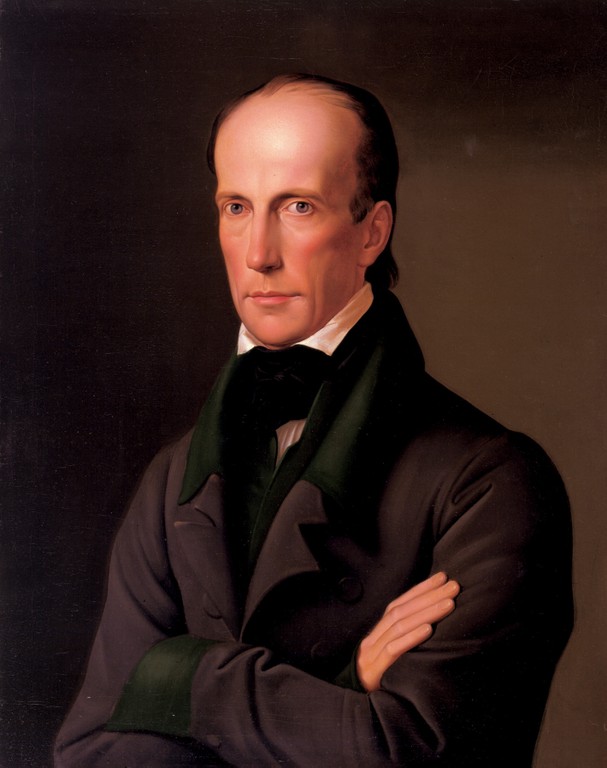
The Landesmuseum Joanneum was established in 1811 by Archduke Johann. It was Austria's first museum as well as a center for continuing education and scientific research. Notably, the Coin Cabinet and the mineralogical collection were extensive, private collections belonging to the archduke. They form the heart of the museum's departments in disciplines from both the humanities and the natural sciences. Around this core of collections, some of the best scientists of the era taught and conducted research: Friedrich Mohs developed the Mohs scale of mineral hardness there and Franz Unger, a pioneer in paleobotany, plant physiology, phytotomy and soil science, taught here. In 1864, the Joanneum entered the ranks of the "k.k. technical colleges". [ clarification needed ]
Following the decision to raise the institution into the ranks of imperial colleges, as well as for organizational reasons and the need for more space, the institution was split in 1887. The college became the Graz University of Technology, and the collections of the Joanneum, both scientific and cultural-historical, were combined into the Landesmuseum Joanneum.
The Joanneum show collections occurred in the "Lesliehof" along the Raubergasse in Graz just off the main square. However, the collections soon outgrew the confines of the residence. A new museum building was erected between 1890 and 1895, along the Neutorgasse in Graz directly behind the Lesliehof. This building, designed in the neobaroque style by August Gunold, became the "New Joanneum".
After Nazi Germany's annexation of Austria, Jews were persecuted and their property seized, including the artworks that belonged to Jewish art collectors. Many of these artworks, often seized via the Vugesta Nazi looting organisation, ended up in the possession of museums, including the Universalmuseum Joanneum. In April 1998, the Joanneum was one of the first museums in Austria to set up a working group on "Acquisitions and provisions from Jewish property 1938–1955". According to the official report published by the museum in 2010, in the post-war period, looted cultural assets still remained in the possession of the museum despite restitution laws. Provenance research began and some artworks were returned to the heirs of the Jewish collectors who had been looted.
Beginning in 2009, both buildings, as well as the open ground between them, underwent extensive renovation and construction. A new, central, underground entrance and three-story, underground depot adjoining both buildings and the Styrian Provincial Library was built. During the Joanneum's bicentennial in 2011, the New Gallery art museum and the multimedia collection opened in the renovated Neutorgasse building. The Museum of Nature and Science was redesigned in its original, albeit renovated, location in the Lesliehof.
Until 2003, the Joanneum was governed by the Styrian regional government. In 2003, coinciding with the designation of Graz as the European Capital of Culture, the Joanneum was spun off into a limited liability company ( Gesellschaft mit beschränkter Haftung ). While the Joanneum gained some autonomy in business, marketing and budgetary decision-making with this move, the Province of Styria remains the successor of Archduke Johann and retains all ownership and property rights to the buildings and collections.
The museum is the largest of its kind in central Europe and second only to the Kunsthistorisches Museum in Vienna in size for Austrian museums in general. The Joanneum employs an international team of about 500 people across fields from visitor services to acquisitions, conservation and preservation to scientific research. The more than 4.5 million objects among the various collections as well as historical buildings and locations form the basis of a multifaceted exhibition program. Steeped in tradition, the Joanneum collects, preserves, conserves, researches and conveys a broad spectrum of information dealing with the nature, history, culture and art of Styria in an international context with an eye towards the future.
After Nazi Germany's annexation of Austria, Jews were persecuted and their property seized, including the artworks that belonged to Jewish art collectors. Many of these artworks, often seized via the Vugesta Nazi looting organisation, ended up in the possession of museums, including the Universalmuseum Joanneum. In April 1998, the Joanneum was one of the first museums in Austria to set up a working group on "Acquisitions and provisions from Jewish property 1938–1955". According to the official report published by the museum in 2010, in the post-war period, looted cultural assets still remained in the possession of the museum despite restitution laws. Provenance research began and some artworks were returned to the heirs of the Jewish collectors who had been looted.
Beginning in 2009, both buildings, as well as the open ground between them, underwent extensive renovation and construction. A new, central, underground entrance and three-story, underground depot adjoining both buildings and the Styrian Provincial Library was built. During the Joanneum's bicentennial in 2011, the New Gallery art museum and the multimedia collection opened in the renovated Neutorgasse building. The Museum of Nature and Science was redesigned in its original, albeit renovated, location in the Lesliehof.

Until 2003, the Joanneum was governed by the Styrian regional government. In 2003, coinciding with the designation of Graz as the European Capital of Culture, the Joanneum was spun off into a limited liability company ( Gesellschaft mit beschränkter Haftung ). While the Joanneum gained some autonomy in business, marketing and budgetary decision-making with this move, the Province of Styria remains the successor of Archduke Johann and retains all ownership and property rights to the buildings and collections.
The museum is the largest of its kind in central Europe and second only to the Kunsthistorisches Museum in Vienna in size for Austrian museums in general. The Joanneum employs an international team of about 500 people across fields from visitor services to acquisitions, conservation and preservation to scientific research. The more than 4.5 million objects among the various collections as well as historical buildings and locations form the basis of a multifaceted exhibition program. Steeped in tradition, the Joanneum collects, preserves, conserves, researches and conveys a broad spectrum of information dealing with the nature, history, culture and art of Styria in an international context with an eye towards the future.
The Landeszeughaus originally was the central weapons depot of the Duchy of Styria during the Ottoman Wars. It is the only remaining armory of its type in the world. [ citation needed ] The installation remained largely unchanged for nearly 400 years and provides the atmosphere of an authentic armory of the 17th century. 32,000 exhibits are housed in the collection; suits of armor, coats of mail, helmets, melee weapons, firearms and other engines of war. The military history of Styria is illustrated with its own exhibition in the cannon hall.
The Folkloric Museum (Volkskundemuseum) houses the oldest and most extensive collection of folkloric and folk culture objects in Styria. [ citation needed ] It was opened in 1913, and is located in a former Capuchin monastery just inside Graz's only remaining Renaissance city-gate, the Paulustor (St. Paul's Gate), erected under Ferdinand II. The library of folklore contains over 14,000 individual volumes as well as an archive of original material and over 20,000 slides and historic photographs documenting the life of rural Styria. The exhibits offer insights into the rural culture and lifestyle of pre-industrial Styria. The collection emphasizes the life, fashion and beliefs of the Styrian people, showing the social and cultural relations between the person and the objects left behind. Specific features of the collection are the original smoking room and the Traditional Garments Hall (Trachtensaal). [ clarification needed ] The complex also includes the Antoniuskirche (St. Anthony's Church) with original paintings by Giovanni Pietro de Pomis and Hans Adam Weissenkircher, where traditional "Styrian Shepherds' and Crib Songs" are performed before Christmas along with new compositions by local composers.
The Styrian Treasury holds the cultural history collection of the Joanneum and encompasses around 35,000 objects from all areas of the aesthetically informed way of life – from the Middle Ages up to the present-day: They bear witness to Styrian history and offer examples of life among Styrian royalty and nobility as well as the domestic life of the aristocracy and middle-class; artisans' crafts in metal, wood, ivory, ceramic, glass and textiles as well as collections of wrought iron objects, traditional garments and musical instruments are presented. The Styrian ducal hat, the magnificent coach of Emperor Frederick III and a stone coat of arms from the Graz Castle count among the most significant objects in the collection. To coincide with the Joanneum's bicentennial year, the cultural history collection opened the History Museum in summer 2011 in the former Herberstein city palace in Sackstrasse and presents a newly designed permanent exhibition expanded by special exhibitions.

The History Museum is housed in the former Herberstein Palace and, in addition to the collection and temporary exhibitions, also opens the Baroque staterooms to visitors. The Herberstein Palace was originally renovated into a Baroque city palace for the Princes of Eggenberg by Austrian architect Joseph Hueber. The palace passed into the possession of a branch of the Herberstein family in 1774 after the extinction of the male line of Eggenberg heirs.
The Joanneum Quarter (German: Joanneumsviertel ) includes the original Joanneum building on the Raubergasse as well as the Neutorgasse building and the Styrian Provincial Library. A grand entrance provides access to all three buildings. Between the three buildings there is a three-story deep, subterranean depot for the library's collections.
The New Gallery (Neue Galerie) originated in 1941 with the division of the Provincial Art Gallery, founded in 1811 as part of the Joanneum, into the Old Gallery (Alte Galerie) – comprising Medieval to Baroque artworks up to 1800 – and the New Gallery (Neue Galerie) – comprising works beginning with Neoclassicism, Romanticism, Realism and Modern art. The museum has an extensive collection of pedagogic art from the 19th and 20th centuries featuring works by Austrian artists including Ferdinand Georg Waldmüller, Egon Schiele, Gustav Klimt, Maria Lassnig and Arnulf Rainer as well as international artists such as Marcel Duchamp, Robert Rauschenberg and Fred Sandback. The gallery focuses on procuring and exhibiting an ever-growing collection of contemporary art.
The New Gallery houses an extensive collection of some 40,000 graphics as well as photographs, film and video collections. Like the Styrian Arts Hall (Halle für Kunst Steiermark, formerly Künstlerhaus) and the Graz Museum of Contemporary Art (Kunsthaus Graz), the New Gallery provides a venue for contemporary artists, both local and international, with a variety of temporary exhibitions. Among these contemporary artists, controversial Styrian artist Günter Brus was to have his own permanent exhibition space, called the Bruseum, in the newly renovated "Neutorgasse" building in the Joanneum Quarter.
The multimedia collections (formerly known as the Picture and Tone Archives) were established in 1960 to collect photographic, film and audio material relating to Styria for research and educational purposes and to make these materials available to the general public. The collection presently consists of more than 2.5 million photographs, tens of thousands of audio recordings and thousands of films that document the development of the Bundesland of Styria from the dawn of the era of photography, film and audio recording.
Closest places in our Austria guide.
More places to explore in Austria.


