Germany
Staatliche Kunstsammlungen Dresden
Art museum · Dresden
Museum

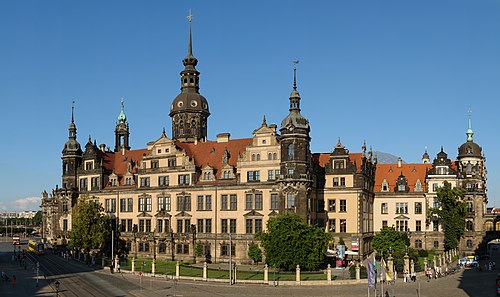
The Green Vault (German: Grünes Gewölbe; pronounced [ˈɡʁyːnəs ɡəˈʋœlbə]) is a museum located in Dresden, Germany, which contains the largest treasure collection in Europe. The museum was founded in 1723 by Augustus the Strong of Poland and Saxony, and features a variety of exhibits in styles from Baroque to Classicism. The Green Vault is named after the formerly malachite green-painted column bases and capitals of the initial rooms. It is one of the oldest museums in the world; it is older than the British Museum, opened in 1759, but the Kunstkamera in St. Petersburg, Russia was opened in 1714 and the Vatican Museums date their foundation to the public display of the newly excavated Laocoön group in 1506. After the bombing of Dresden during World War II, the Green Vault was completely restored. Today, its treasures are shown in two exhibitions: The Historic Green Vault (Historisches Grünes Gewölbe) is famous for its splendors of the historic treasure chamber as it existed in 1733, while the New Green Vault (Neues Grünes Gewölbe) focuses the attention on each individual object in neutral rooms. The Green Vault is located on the first and second floors of the western section of Dresden...
In 1547, Holy Roman elector Moritz of Saxony ordered the construction of an additional wing to Dresden Castle. Four of the added rooms on the first floor of the palace were given elaborate, molded plaster ceilings. In these rooms, the column bases and capitals were painted a bluish-green color. Due to this coloring, the rooms were referred to as the "Green Vault." The official name of these rooms, which were protected against fire and robbery by thick walls and iron shutters and doors, was "Privy Repository" ( Geheime Verwahrung ).
Throughout the 17th century, the Privy Repository was used by the rulers of the Electorate of Saxony as a private treasure chamber for important documents and jewelry. Then, between 1723 and 1729, the elector Frederic Augustus I, today referred to as Augustus the Strong, turned the private chambers into a public museum. First, he commanded splendid rooms to be created in which to display his collection. The Pretiosensaal (Hall of Treasures) and the Eckkabinett (Corner Cabinet) were listed as completed in the inventory of 1725; they reached their present-day form in this construction phase. An extension followed in 1727. Augustus’ intentions have been preserved on a ground plan from 1727 on which he drew his ideas. As in the first construction phase, the architect Matthäus Daniel Pöppelmann planned and built a museum-like, artistic structure of German Baroque grandeur. A suite of eight interconnecting rooms was constructed whose architectural beauty complemented the abundance and quality of the priceless treasures. Augustus the Strong could now exhibit his entire collection of valuables, including bronze statues and works of art in silver, gold, amber and ivory. The sequence of rooms was deliberately staged, presenting the objects according to their materials. By the end of his almost four-decade-long reign in 1733, Augustus the Strong had made his crown treasures and his inherited riches accessible to the public – an unprecedented innovation in the Baroque period.
These rooms remained unchanged for almost two centuries. When war was imminent in 1938, the art treasures were taken to the Königstein Fortress.
The Green Vault was severely damaged in the February 13, 1945 bombing of Dresden in World War II. Three of the eight rooms were totally destroyed. At the end of the war in 1945, the treasures were confiscated by the Red Army and transported to the Soviet Union. After their return to Dresden in 1958, part of the collection was displayed at the Albertinum.
In 2004, the New Green Vault was opened on the second floor of the rebuilt Dresden castle. Its modern style of presentation centers on the works of art. In 2006, the reconstructed Historic Green Vault was reopened in the magnificent suite of rooms on the first floor as it had existed in 1733 at the time of its founder's death.
On 25 November 2019, the Green Vault was broken into, and three sets of early 18th century royal jewellery were stolen. Each set consists of 37 items, made up of diamonds, rubies, emeralds, and sapphires. It was estimated that the stolen items were worth up to 1 billion euros ( US$ 1.1 billion).
In December 2022, investigators found 31 objects stolen in the 2019 burglary, reportedly after talks with the lawyers of six men on trial for the theft.
In May 2023, five men were found guilty of the heist. The robbers were a part of the Remmo clan, a criminal clan that is involved in organised crime and conducted raids on a department store and a bank robbery. One of the thieves was also involved in the theft of a gold coin from the Bode museum in Berlin.
In 1547, Holy Roman elector Moritz of Saxony ordered the construction of an additional wing to Dresden Castle. Four of the added rooms on the first floor of the palace were given elaborate, molded plaster ceilings. In these rooms, the column bases and capitals were painted a bluish-green color. Due to this coloring, the rooms were referred to as the "Green Vault." The official name of these rooms, which were protected against fire and robbery by thick walls and iron shutters and doors, was "Privy Repository" ( Geheime Verwahrung ).
Throughout the 17th century, the Privy Repository was used by the rulers of the Electorate of Saxony as a private treasure chamber for important documents and jewelry. Then, between 1723 and 1729, the elector Frederic Augustus I, today referred to as Augustus the Strong, turned the private chambers into a public museum. First, he commanded splendid rooms to be created in which to display his collection. The Pretiosensaal (Hall of Treasures) and the Eckkabinett (Corner Cabinet) were listed as completed in the inventory of 1725; they reached their present-day form in this construction phase. An extension followed in 1727. Augustus’ intentions have been preserved on a ground plan from 1727 on which he drew his ideas. As in the first construction phase, the architect Matthäus Daniel Pöppelmann planned and built a museum-like, artistic structure of German Baroque grandeur. A suite of eight interconnecting rooms was constructed whose architectural beauty complemented the abundance and quality of the priceless treasures. Augustus the Strong could now exhibit his entire collection of valuables, including bronze statues and works of art in silver, gold, amber and ivory. The sequence of rooms was deliberately staged, presenting the objects according to their materials. By the end of his almost four-decade-long reign in 1733, Augustus the Strong had made his crown treasures and his inherited riches accessible to the public – an unprecedented innovation in the Baroque period.
These rooms remained unchanged for almost two centuries. When war was imminent in 1938, the art treasures were taken to the Königstein Fortress.
The Green Vault was severely damaged in the February 13, 1945 bombing of Dresden in World War II. Three of the eight rooms were totally destroyed. At the end of the war in 1945, the treasures were confiscated by the Red Army and transported to the Soviet Union. After their return to Dresden in 1958, part of the collection was displayed at the Albertinum.
In 2004, the New Green Vault was opened on the second floor of the rebuilt Dresden castle. Its modern style of presentation centers on the works of art. In 2006, the reconstructed Historic Green Vault was reopened in the magnificent suite of rooms on the first floor as it had existed in 1733 at the time of its founder's death.
On 25 November 2019, the Green Vault was broken into, and three sets of early 18th century royal jewellery were stolen. Each set consists of 37 items, made up of diamonds, rubies, emeralds, and sapphires. It was estimated that the stolen items were worth up to 1 billion euros ( US$ 1.1 billion).
In December 2022, investigators found 31 objects stolen in the 2019 burglary, reportedly after talks with the lawyers of six men on trial for the theft.
In May 2023, five men were found guilty of the heist. The robbers were a part of the Remmo clan, a criminal clan that is involved in organised crime and conducted raids on a department store and a bank robbery. One of the thieves was also involved in the theft of a gold coin from the Bode museum in Berlin.
Prior to the 2019 heist, the collection consisted of over 4,000 pieces, with almost 1,100 on display in the New Green Vault and about 3,000 shown in the Historic Green Vault.
Entrance to the Historic Green Vault requires advance purchase of tickets for a specific entry time slot. A limited number of tickets is also sold every morning. The New Green Vault can be visited at any time.
The Historic Green Vault has approximately 3,000 pieces of jewelry on display, including works in gold, amber, and ivory. Gemstone vessels and bronze statuettes are on display without showcases, in front of mirrored display walls. The Historic Green Vault is located on the first floor of Dresden Castle, and spans roughly 2,000 square metres.
Closest places in our Germany guide.
More places to explore in Germany.