
Canada
Textile Museum of Canada
Textile museum · Ontario
Military museum

The Royal Canadian Military Institute (RCMI) is a private members' organization with a focus on military history, defence studies and international affairs. Located in Toronto, Ontario, Canada, it was founded as the Canadian Military Institute on January 14, 1890. General Sir William Dillon Otter set the founding principles: "to provide in an Institute for the defence forces of Canada a Library, museum and club for the purposes of the promotion of military art, science and literature, to gather and preserve the records of the defence forces, and develop its specialized field in Canadian history." The motto of the RCMI is Fidelis Per Manere (Latin for 'To remain faithful'). The RCMI's original headquarters at 426 University Avenue was built in 1907. Designed by William Craven Vaux Chadwick, the library was built in 1908. The building was expanded in 1912 and 1935, and renovated during the 1960s. In 2007, the facade of 426 University Avenue was reconstructed by E R A Kubaneck Architects according to archeological records. Governor General David Johnston laid the cornerstone on June 9, 2012, for a 42-story, 315 suite condominium residence, lofts, and mixed-use project. The colonel in chief...
The RCMI provides a forum to promote education on defence, security and foreign affairs in a unique collegial environment. The RCMI intends to become recognized as the pre-eminent Canadian forum for discussion, research and education on defence, security and foreign affairs. The RCMI seeks to promote the study of military strategy, arts, and literature. The RCMI seeks to promote pride in a strong, unified and independent Canada by enhancing public understanding of political and military history.
The RCMI outreach to the public consists of a speakers program, educational conferences, seminars, open forums and events. The RCMI events include Batoche dinners, guest speakers, Christmas parties, reserve force and regimental dinners. Regular lectures on aspects of Canadian military history, international affairs, and military strategy are held, often as part of the RCMI’s Military History Nights and Defence Studies Committee Roundtables and Luncheons.
The RCMI prepares and publishes original papers, studies and journals related to military and strategic issues, foreign affairs, and artefacts: the 'RCMI Commentary', 'Sitrep', 'The General Sir William Otter Papers', and 'Heritage Papers'. The RCMI has also published annual yearbooks.
The RCMI has a museum, archive, library, art collection, publications and online resources. The exhibitions focus on the evolution of Canadian military arms, equipment, and uniforms.

Following a four-year reconstruction, the RCMI returned to its new quarters at 426 University Avenue at the beginning of June 2014. The RCMI offers overnight accommodations and food and beverage service.
On January 14, 1890, 50 officers of the Toronto Garrison founded the Royal Canadian Military Institute, then known as the Canadian Military Institute (CMI), with the then governor general of Canada, Lord Stanley, as its patron. The Militia Institute, which was organized in 1878, presented 200 military volumes on the founding of the institute. Although the founders sought to enrol 50 to 100 members by the end of 1890, 162 resident and 122 non-resident members had joined. The headquarters of the Canadian Military Institute in 1896 was on University Avenue.
In 1907, the CMI acquired 243-5 Simcoe Street, which is at the rear of its current premises. On August 29, 1907, the then governor general, Earl Grey, laid the cornerstone. William Craven Vaux Chadwick, architect, designed the new CMI Library on University Avenue in 1908.
In 1912, CMI acquired the front of the present premises on University Avenue and the then governor general, the Duke of Connaught, laid the cornerstone.
Col. J. B. McLean was the last of the founders of the RCMI to die; he served as honorary president of the RCMI from 1948 until his death in 1951.

The institute's founding president was Lieutenant Colonel William Dillon Otter, formerly adjutant of The Queen's Own Rifles of Canada. He went on to become one of Canada's most distinguished military figures, ending his career as General Sir William Otter KCB CMG CVO, Inspector-General of Militia of Canada. Colonel Otter set the founding objectives of the institute, to be "the Promotion and Fostering of Military Art, Science and Literature in Canada."
Col. J. M. Gibson was the first vice-president of CMI; he later served as Lieutenant-Governor of Ontario and was the father of the Honourable Mr. Justice Col. Colin Gibson, an honorary life member of the institute. The first secretary at CMI was Lt. Homfray Irving, a member of the Old Eighteen (first cadets at Royal Military College of Canada ), the first battalion sergeant major at R.M.C., winner of the Sword of Honour at R.M.C. and the first president of the R.M.C. Club of Canada.
Membership was limited from 1890-1940 to army officers and ex-officers of Her Majesty’s forces. In 1940, membership was limited to army, navy, and air officers and ex-officers of Her Majesty’s forces. In 1940 the executive committee of the RCMI agreed to change the name of the RCMI to the Canadian Officers' Club and Institute, and to provide navy officers with wardroom.
As 1914 approached, the institute was operating at a financial loss, and the executive considered closure. With the outbreak of the Great War in 1914, there was a large number of potential membership candidates. From 1919–1930 the financial position of the institute and membership were healthy. After 1930, the membership dwindled a little each year, owing to deaths and resignations. With the Great Depression it was uncertain whether the institute could survive. Resignations increased since many members could not afford the yearly membership fee of $15. Some affluent citizens who had resigned from their $100-a-year clubs, but still wanted a club to belong to, joined the CMI. In 1935, accounts were short by $52,000. Although criminal prosecution was pointless, so far as collecting the balance was concerned, a cheque for $35,000 was sent by the bonding company. The $17,000, which could have been a death blow to the institute, was written off. In 1935, the executive considered closing. A new finance committee was set up, chaired by Lt. Col. F. S. McPherson, who kept the institute in the black during the period he was either president or chairman of the finance committee, from 1936 to 1953 inclusive, except for two years he was overseas on active service. Under McPherson an annual budget was prepared in advance and adhered to. Once a dollar was banked, it stayed in the bank. Entrance fees were banked and the institute operated on annual fees. The "chit" system was abolished and members were put on a cash basis. These sound financial principles prevail today. From 1936 until 1958, the institute operated at a profit.
In 1943, a captain of the Canadian Women's Army Corps presented herself to the secretary with the membership application and demanded membership. Although the bylaws did not specify that members had to be male, she was denied membership. Some concessions were made to women. Wives of members were permitted to attend on "Open Nights", usually held once a month. Members could entertain their female guests at the Ladies Lounge, where drinks and dinner were available daily at five o'clock.
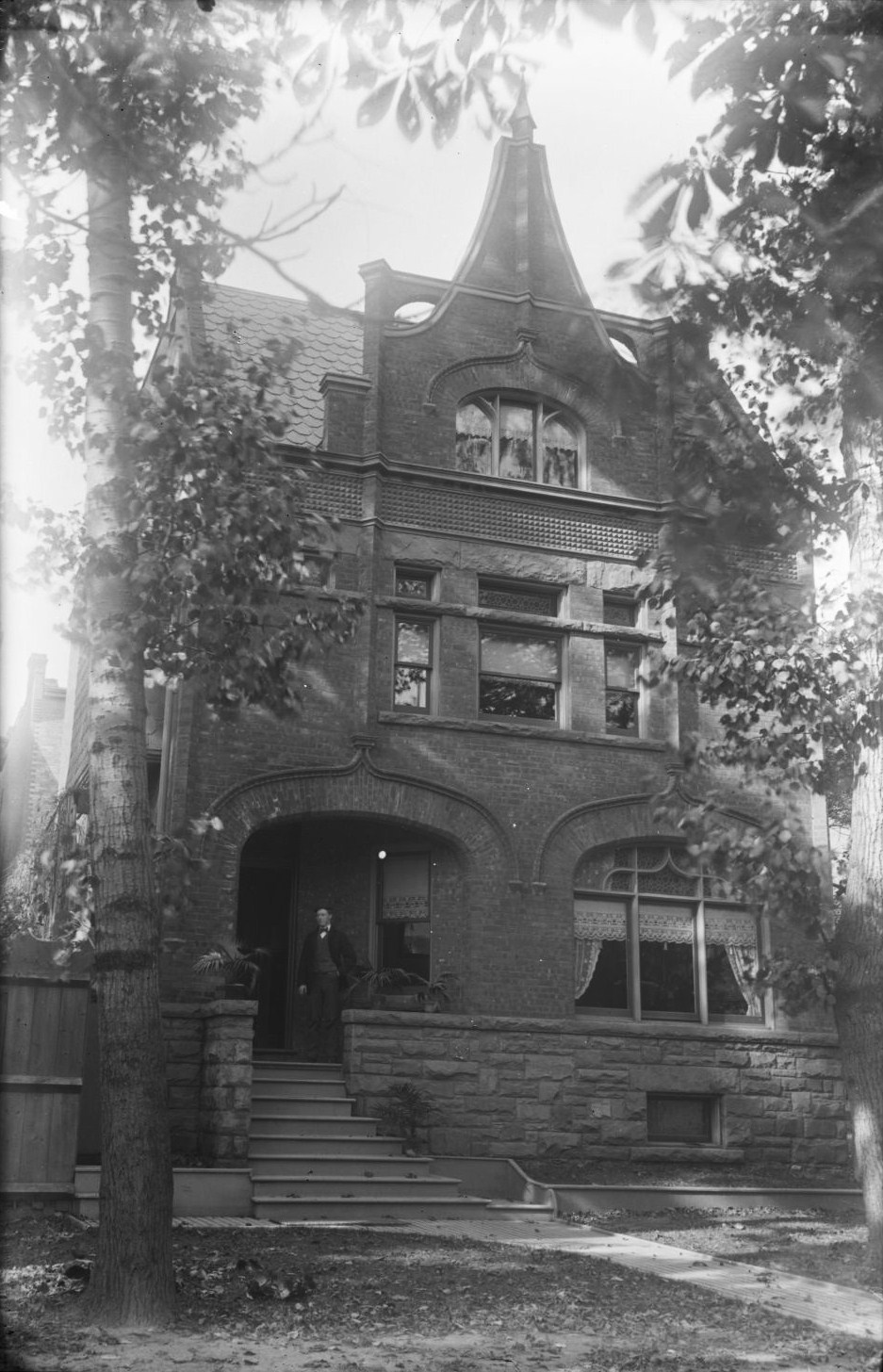
The Canadian Officers' Club and Institute
In 1946, Commander A. C. Turner, who was the first naval officer to serve as president of the Institute, insisted that the name of the Institute be changed to "The Canadian Officers' Club and Institute", although he opted to forego a Navy wardroom.
In 1948, the Institute had its first Air Force officer as president. In 1948, the Honourable Colin Gibson, who served as the Secretary of State agreed to consult with the Sovereign through the proper channels about granting the Institute the prefix "Royal", provided the Institute changed its name back to Canadian Military Institute. The application granting the Institute the prefix "Royal" was granted by George VI in 1948.
In 1948, a record profit year, the Institute could have remitted all annual fees to their members and still have shown a slight profit. As World War II receded, the membership declined. Many commanding officers urged their regular forces and reserve officers to join. The Institute reduced the $25 entrance fee and $35 annual dues to serving officers of both the reserve and the active services.
To contribute to the 'New Building Fund', a lot to the south was sold for $150,000, a tax on beer added $50,000, bequests by deceased members, notably one from Major James Bell, of $15,000 and surpluses were added to the RCMI coffers. The Executive Committee of the RCMI acquired a 75-foot lot to the south of the present clubhouse for $1,000 a foot to build a new clubhouse. In 1955, the back part of the clubhouse, which was over 100 years old was demonished and rebuilt.
Closest places in our Canada guide.
More places to explore in Canada.


.jpg?width=1200)


