
Australia
Santos Museum of Economic Botany
Museum · Adelaide
Urban park
.jpg?width=1200)
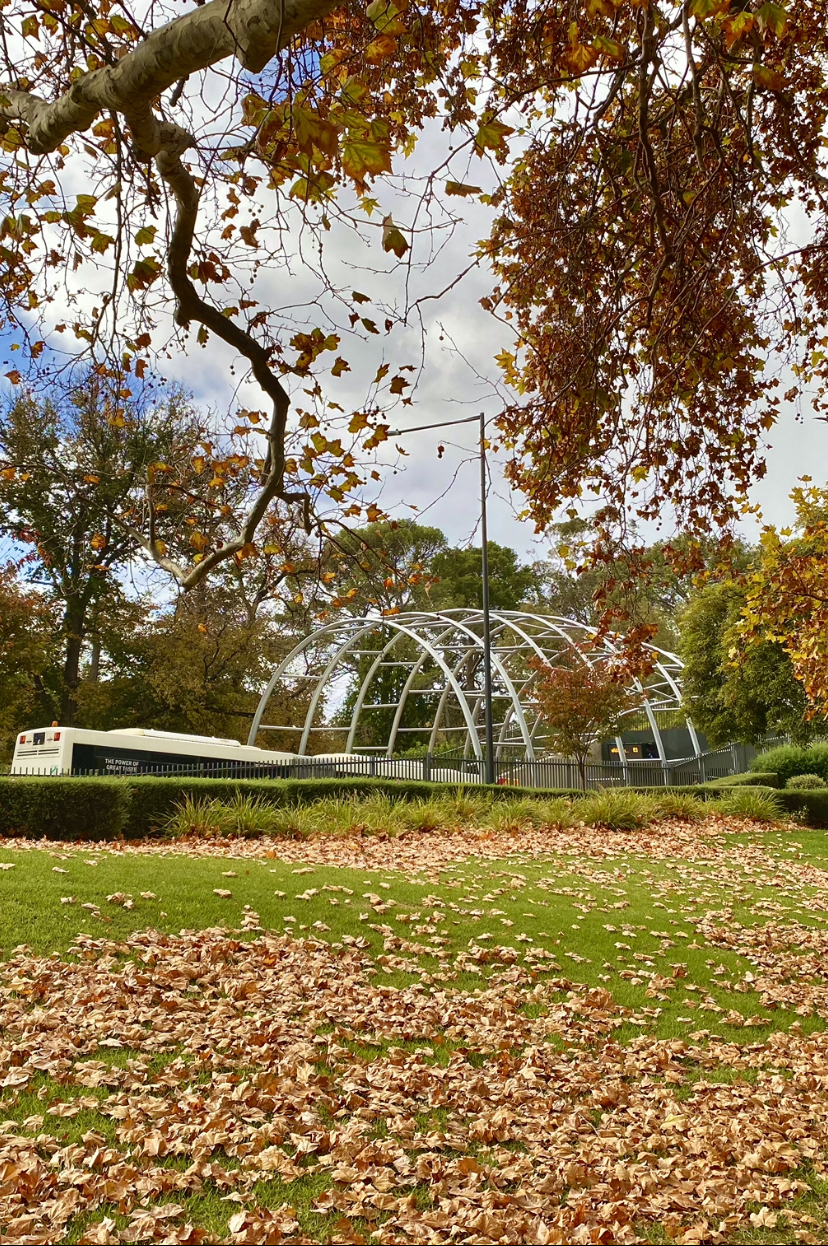
Rymill Park / Murlawirrapurka (previously spelt Mullawirraburka), and numbered as Park 14, is a recreation park located in the East Park Lands of the South Australian capital of Adelaide. There is an artificial lake with rowboats for hire, a café, children's playground and rose garden, and the Adelaide Bowling Club is on the Dequetteville Terrace side. The O-Bahn passes underneath it, to emerge at the western side opposite Grenfell Street. Before and in the early days of the colonisation of South Australia, the eastern park lands were used as camping grounds for the local Kaurna people and later people from other nearby Aboriginal peoples, such as the Ngarrindjeri. The park underwent extensive redevelopment, including the construction of the lake, around 1959–1960. It has been used for many cultural and sporting events, in particular Adelaide Fringe, Feast and Festival of Arts events, Carnevale in Adelaide, the Adelaide International Horse Trials. The Fringe venue hub set up on the western side of the park is known as Gluttony.
Before European settlement, the eastern parklands were used by the Kaurna people, as a meeting and camping area. In the late 19th century, Poltpalingada Booboorowie, a personality well known among the European settlers as Tommy Walker, a Ngarrindjeri man, and other Aboriginal people sometimes referred to as the " fringe-dwellers " camped in the area. They were forced to move from the area, first to the Adelaide Botanic Garden area and then to Glenelg.
Keith Conlon described the area as "bare, swampy in winter, and populated by cows" from the time that Adelaide was founded and the parklands established by Colonel Light, and 120 years later.
The Adelaide Bowling Club moved to its present location, with its entrance off Dequetteville Terrace, in 1958.
In 1959–60, Adelaide City Council made many improvements to the park area. Following a tour overseas, Town Clerk William Veale suggested an artificial lake, playground and picnic area. The new facilities were opened by Lord Mayor Charles John Glover in late 1960. The park was named after Sir Arthur Rymill, Lord Mayor of Adelaide from 1950 to 1954 and council member for 23 years, who had actively supported the extension and improvement of Adelaide’s parklands. The lake was constructed in 1959 and the rose gardens were created in the 1960s by excavating what was then the Bartels Road rubbish tip.
Following the Council's Reconciliation Vision Statement in 1997, it set about applying dual naming of many city sites and features, deciding on a Kaurna name in collaboration with appropriate authorities and community organisations. In 2003 the final group of names were endorsed, and the name Mullawirraburka was applied to Rymill Park. The spelling was later revised to Murlawirrapurka, as a more correct transcription of Kaurna. The name Murlawirrapurka was the name of a Kaurna man, known to settlers as "King John", "King Jack", or "Onkaparinga Jack". His name was derived from Kaurna words (old spelling) mulla − dry and wirra – forest, which together made the name of Mullawirra, the "territory" in the Aldinga - Willunga area which Murlawirrapurka inherited from his father, and burka – " elder ". He was one of three elders well known to the colonists (along with Kadlitpina and Ityamai-itpina ), and more is known about him than any other Kaurna person of that time.
After being drained in November 2007 to make repairs addressing the leaking of 200,000 litres (53,000 US gal) per week, the lake was refilled in September 2008.
In 2015, a plan to realign Rundle Street as part of a plan to extend O-Bahn bus services to and from the city of Adelaide created controversy. The plan would result in the removal of numerous long established regulated and significant trees. Critics of the plan included Mark Parnell MLC, Nick Xenophon and former Australian Democrats leader, Ian Gilfillan. Public objections to the redevelopment prompted the creation of the Rymill Park Alliance and the Save Adelaide's Rymill Park campaign and Facebook page.
However, construction went ahead and was completed in 2017 December. Rymill Park and nearby Rundle Park / Kadlitpina was closed and a tunnel was built underneath them.
In late 2019, the Council published a draft Master Plan and Community Land Management Plan (CLMP), inviting comment from the community both online and at a public meeting on 8 December.

The lake underwent a major upgrade costing A$6 million, from August 2023 until its reopening in April 2024. The changes make it more environmentally friendly, and includes a new pipeline connecting it to the Victoria Park / Pakapakanthi that will supply most of its water. This makes it more cost-effective for the Adelaide City Council, which was previously spending A$160,000 a year topping up the water and replacing it after outbreaks of algae.
Before European settlement, the eastern parklands were used by the Kaurna people, as a meeting and camping area. In the late 19th century, Poltpalingada Booboorowie, a personality well known among the European settlers as Tommy Walker, a Ngarrindjeri man, and other Aboriginal people sometimes referred to as the " fringe-dwellers " camped in the area. They were forced to move from the area, first to the Adelaide Botanic Garden area and then to Glenelg.
Keith Conlon described the area as "bare, swampy in winter, and populated by cows" from the time that Adelaide was founded and the parklands established by Colonel Light, and 120 years later.
The Adelaide Bowling Club moved to its present location, with its entrance off Dequetteville Terrace, in 1958.
In 1959–60, Adelaide City Council made many improvements to the park area. Following a tour overseas, Town Clerk William Veale suggested an artificial lake, playground and picnic area. The new facilities were opened by Lord Mayor Charles John Glover in late 1960. The park was named after Sir Arthur Rymill, Lord Mayor of Adelaide from 1950 to 1954 and council member for 23 years, who had actively supported the extension and improvement of Adelaide’s parklands. The lake was constructed in 1959 and the rose gardens were created in the 1960s by excavating what was then the Bartels Road rubbish tip.

Following the Council's Reconciliation Vision Statement in 1997, it set about applying dual naming of many city sites and features, deciding on a Kaurna name in collaboration with appropriate authorities and community organisations. In 2003 the final group of names were endorsed, and the name Mullawirraburka was applied to Rymill Park. The spelling was later revised to Murlawirrapurka, as a more correct transcription of Kaurna. The name Murlawirrapurka was the name of a Kaurna man, known to settlers as "King John", "King Jack", or "Onkaparinga Jack". His name was derived from Kaurna words (old spelling) mulla − dry and wirra – forest, which together made the name of Mullawirra, the "territory" in the Aldinga - Willunga area which Murlawirrapurka inherited from his father, and burka – " elder ". He was one of three elders well known to the colonists (along with Kadlitpina and Ityamai-itpina ), and more is known about him than any other Kaurna person of that time.
After being drained in November 2007 to make repairs addressing the leaking of 200,000 litres (53,000 US gal) per week, the lake was refilled in September 2008.
In 2015, a plan to realign Rundle Street as part of a plan to extend O-Bahn bus services to and from the city of Adelaide created controversy. The plan would result in the removal of numerous long established regulated and significant trees. Critics of the plan included Mark Parnell MLC, Nick Xenophon and former Australian Democrats leader, Ian Gilfillan. Public objections to the redevelopment prompted the creation of the Rymill Park Alliance and the Save Adelaide's Rymill Park campaign and Facebook page.
However, construction went ahead and was completed in 2017 December. Rymill Park and nearby Rundle Park / Kadlitpina was closed and a tunnel was built underneath them.
In late 2019, the Council published a draft Master Plan and Community Land Management Plan (CLMP), inviting comment from the community both online and at a public meeting on 8 December.
Closest places in our Australia guide.
More places to explore in Australia.


.jpg?width=1200)


.jpg?width=1200)
.jpg?width=1200)
.jpg?width=1200)


