Austria
Papyrus Collection of the Austrian National Library
Museum · Vienna
Museum

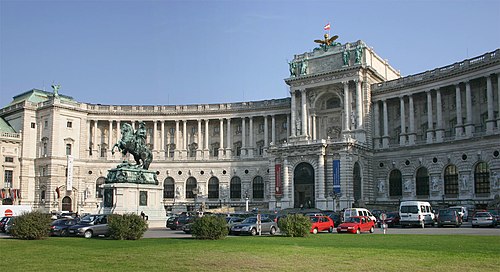
The Sammlung alter Musikinstrumente (SAM) (lit. Collection of Old Musical Instruments) is a museum collection dedicated to historical musical instruments. It forms part of the Kunsthistorisches Museum Vienna (KHM) in Austria. Together with the Imperial Armoury, it is housed on the first floor of the Neue Hofburg at Heldenplatz. Since 2018, access to the collection has been via the Weltmuseum Wien, which belongs to the same museum group. With origins dating back to the sixteenth century, the Sammlung alter Musikinstrumente is one of the most significant collections of its kind in Austria and is internationally known for its unique concentration of Renaissance and Baroque instruments, including exceptional rarities, as well as significant evidence of the Viennese tradition of keyboard instrument making.
The historical foundations of the Sammlung alter Musikinstrumente date back to the sixteenth century and derive from two core early collections, which were brought together in Vienna in the early twentieth century and first jointly displayed in the Neue Hofburg in 1916.
One core nucleus originates from Ambras Castle in Innsbruck, where Archduke Ferdinand II of Tyrol (1529–1595) established one of the most known Kunst- und Wunderkammern ( chambers of arts and curiosities ) of the late Renaissance. Musical instruments formed an integral part of this collection and were documented in the 1596 Ambras inventory, among the earliest surviving inventories of its kind. In 1806 this collection was transferred to the Lower Belvedere (Unteres Belvedere) in Vienna, where it remained until the end of the 1880s. It was subsequently incorporated into the Kunsthistorisches Hofmuseum, the predecessor institution of the Kunsthistorisches Museum.
The second nucleus derives from the collection established in the second half of the sixteenth century by the Marchese Pio Enea II degli Obizzi (1592–1674) at Catajo Castle in the territory of Padua. During the eighteenth century, the collection was significantly expanded by Tommaso degli Obizzi (1750–1803), the last member of the family line, who bequeathed the castle and its collections to the heirs of the House of Austria-Este in Modena. The collection was transferred to Vienna in 1870 and—following the assassination of Archduke Franz Ferdinand of Austria-Este in Sarajevo in 1914—was incorporated into the imperial collections.
The Sammlung alter Musikinstrumente emerged as a distinct museum entity in 1916 within the Sammlung für Plastik und Kunstgewerbe (collection of sculpture and applied arts) of the Kunsthistorisches Museum. In that year, art historian Julius von Schlosser, then director of the Sammlung der Kunstindustriellen Gegenstände (collection of art-industrial objects), brought together the Ambras and Este musical instruments and arranged their first joint display in two rooms of the Neue Hofburg. At this stage, Schlosser also incorporated selected instruments collected by Franz Ferdinand during his world tour of 1892–93. Other musical instruments from this group are held by the Weltmuseum.

Second World War and National-Socialist period
During the 1930s and early 1940s, the collection expanded considerably through acquisitions, exchanges, loans and transfers. Following Austria's annexation to the German Reich in 1938, the SAM experienced intensified activity, partly supported by the National Socialist regime, allowing for an expansion of both its inventory and exhibition space. Among the new acquisitions were instruments originating from Jewish collectors and makers that were confiscated or transferred under coercive circumstances and were often recorded as loans or remained insufficiently documented.
In 1939, the collection was displayed in the Palais Pallavicini, where the temporary exhibition Klaviere aus fünf Jahrhunderten (Keyboards from Five Centuries) was presented. In the same year, the musical instruments of the Gesellschaft der Musikfreunde in Wien (Society of Friends of Music in Vienna) were transferred to the SAM, broadening the chronological scope of the collection, particularly with regard to keyboard instruments from the eighteenth and nineteenth centuries. This transfer included instruments belonging to famous composers like Joseph Haydn, Franz Schubert, Clara and Robert Schumann and Johannes Brahms.
In early 1945, the exhibition closed due to evacuation and safeguarding measures during the final months of the war.
Post-WWII period and modern developments

After the Second World War, the collection reopened to the public in the spring of 1947 in the Neue Hofburg and gradually expanded its display. In 1964, the Sammlung alter Musikinstrumente acquired nine halls along the Burggarten front of the Neue Hofburg, which remain in use today.
From the mid-1960s until the late 1980s, the permanent exhibition largely followed the Hornbostel–Sachs classification system, arranging instruments according to their sound-producing principles. At the same time, selected rooms, most notably the Marble Hall, were dedicated to particularly significant and commemorative instruments associated with well-known composers.
Between 1988 and 1993, the collection was closed for renovation and conceptual reorganisation. The reopening introduced a new exhibition concept that arranged instruments according to historical periods instead of an organological classification.
In 1998, provenance research was introduced within the Kunsthistorisches Museum to investigate the methods and legality of acquisitions since 1933. This led to the ongoing systematic research on museum holdings, including instruments from the SAM, and resulted in the restitution of looted objects and others not been fairly acquired, including the collection of Clarice and Alphonse Rothschild.
In 2015, the opening of the House of Austrian History with main entrance in the Neue Hofburg led to changes in access to the collection. Since then, visitors enter the SAM via the Weltmuseum Wien. After renovation works, the collection partially reopened in 2018.

The historical foundations of the Sammlung alter Musikinstrumente date back to the sixteenth century and derive from two core early collections, which were brought together in Vienna in the early twentieth century and first jointly displayed in the Neue Hofburg in 1916.
One core nucleus originates from Ambras Castle in Innsbruck, where Archduke Ferdinand II of Tyrol (1529–1595) established one of the most known Kunst- und Wunderkammern ( chambers of arts and curiosities ) of the late Renaissance. Musical instruments formed an integral part of this collection and were documented in the 1596 Ambras inventory, among the earliest surviving inventories of its kind. In 1806 this collection was transferred to the Lower Belvedere (Unteres Belvedere) in Vienna, where it remained until the end of the 1880s. It was subsequently incorporated into the Kunsthistorisches Hofmuseum, the predecessor institution of the Kunsthistorisches Museum.
The second nucleus derives from the collection established in the second half of the sixteenth century by the Marchese Pio Enea II degli Obizzi (1592–1674) at Catajo Castle in the territory of Padua. During the eighteenth century, the collection was significantly expanded by Tommaso degli Obizzi (1750–1803), the last member of the family line, who bequeathed the castle and its collections to the heirs of the House of Austria-Este in Modena. The collection was transferred to Vienna in 1870 and—following the assassination of Archduke Franz Ferdinand of Austria-Este in Sarajevo in 1914—was incorporated into the imperial collections.
The Sammlung alter Musikinstrumente emerged as a distinct museum entity in 1916 within the Sammlung für Plastik und Kunstgewerbe (collection of sculpture and applied arts) of the Kunsthistorisches Museum. In that year, art historian Julius von Schlosser, then director of the Sammlung der Kunstindustriellen Gegenstände (collection of art-industrial objects), brought together the Ambras and Este musical instruments and arranged their first joint display in two rooms of the Neue Hofburg. At this stage, Schlosser also incorporated selected instruments collected by Franz Ferdinand during his world tour of 1892–93. Other musical instruments from this group are held by the Weltmuseum.
During the 1930s and early 1940s, the collection expanded considerably through acquisitions, exchanges, loans and transfers. Following Austria's annexation to the German Reich in 1938, the SAM experienced intensified activity, partly supported by the National Socialist regime, allowing for an expansion of both its inventory and exhibition space. Among the new acquisitions were instruments originating from Jewish collectors and makers that were confiscated or transferred under coercive circumstances and were often recorded as loans or remained insufficiently documented.
Closest places in our Austria guide.
More places to explore in Austria.


