Malta
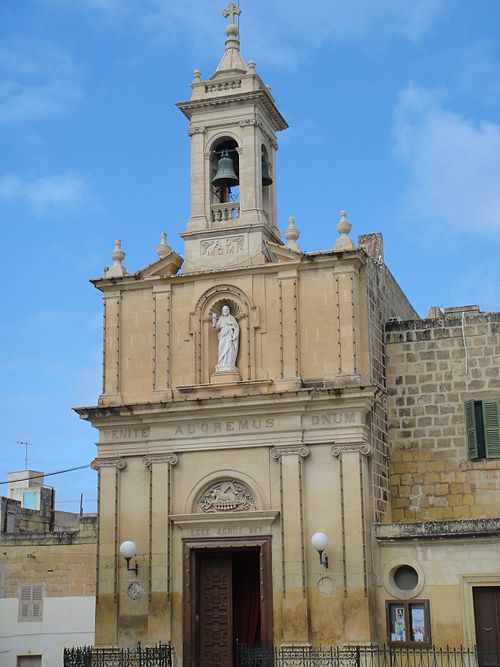
Church of St James, Victoria Gozo
Church building · Rabat
Minor basilica

St George's Basilica or the Basilica and Collegiate Parish Church of Saint George, also simply known in Maltese as San Ġorġ (pronounced [sɐn ˈd͡ʒɔrt͡ʃ]), is a historic Baroque church situated in the middle of Gozo, the second largest island in the Maltese archipelago, and is surrounded by a maze of old narrow streets and alleys. The church had been rebuilt numerous times during the Middle Ages. Today's basilica was built between 1672 and 1678. This is not to be confused with another church by the same name, located in Qormi on the main island, Malta.
The parish originated in Byzantine times from the time of Emperor Theodosius I in the 4th century. The original church was the main Roman pagan temple of Gozo which had been converted by a Greek missionary into a Christian church dedicated to Saint George. The Roman temple stood at the site of the present church. The church is also documented in manuscript sources in c. 1250, when it is recorded functioning as a parish church. St George's was also listed as one of the parishes in Gozo where indulgences could be obtained on a papal bull by Pope Nicholas V for the Holy Year of 1450. Considering the fact that the parish church originated during the Byzantine period, until 1575, the liturgy in St George's parish church was celebrated in the Byzantine Rite rather than the Latin Rite. It was the last church to celebrate the Byzantine liturgy on the island until the transition to the Roman rite. The church had been rebuilt numerous times during the Middle Ages because of the increasing population of the island. In 1511 a scriptura apostolica declared that the church of St George was the parish church of Gozo, thus covering all the population of Gozo. It is also recorded that the parish priest of St George's church during the half of the 16th century, Reverend Lorenzo de Apapis (1501–1586), was taken prisoner together with most of the inhabitants of the island by the invading Ottomans in 1551 to Constantinople. Reverend De Apapis managed to buy his freedom some years later and returned to Gozo and rebuilt the church of St George which had been badly damaged. Likewise the church was reconstructed again in 1583 and 1598.
The present church was planned by Vittorio Cassar when he also demolished the buildings that could serve to cover an enemy attack on the town of Gozo today called the Cittadella. The foundation stone of the present church was laid on 7 August 1672. The church's construction was completed by in 1678 and it was consecrated on 21 September 1755 by Bishop Paul Alphéran de Bussan.
In 1630 the vicar general of the Diocese of Malta, Pier Francesco Pontremoli, proposed the union of the two parishes of Gozo – that of the Assumption in the Citadella and that of St George – because of conflicts and competitions that the two parish priests of the respective parishes where initiating. In the meantime the parish church of St George was rebuilt and finished in 1678. It was on 28 April 1688, that Bishop Davide Cocco Palmieri created from the Matrix church dedicated to the Assumption of Mary in the old town of Gozo four new parishes in Gozo and joined the parish of St George with its Matrix church. This union went on for the next 266 years until 1 August 1955, when the Bishop of Gozo, Giuseppe Pace, dissolved this union between the two parishes by signing the decree Cum hodiernis temporibus in which he established St George as a new parish independent from its mother church, the Gozo Cathedral. Thus St George started carrying once again its pastoral activities.
The first major architectural modification to the church, after it was rebuilt, took place in 1818 when the church façade was rebuilt due to damage suffered by an earthquake that hit Gozo on 1 February 1697, 20 years after the church was completed. The designed for the façade were made by Salvatore Bondi.
In 1880 the associate priest here was Joseph Diacono and under his leadership the Franciscan Sisters of the Heart of Jesus was formed here. In time, Diacono wanted to end the organisation but local Religious Virginia De Brincat disagreed and she became the Superior General. She is now the Venerable Madre Margerita De Brincat.
In the 1930s the church was enlarged with the addition of the naves and the side chapels. Between 1939 and 1940 the dome of the church was reconstructed due to damage done in the earthquakes of 1693 and 1789. The roof was also rebuilt and reconstructed in the Roman style arch between 1938 and 1939. The inauguration of the enlarged church took place on 28 July 1940, by Bishop Mikiel Gonzi.
On 6 September 1958 Archpriest Cefai announced to the gathered congregation that the church was honoured with the title of Basilica. The decree, Merito dilaudatur templum, dated 6 September 1958, confirmed Pope Pius XII 's decision that the parish church was now a Basilica. With this title the church received certain privileges such as precedence before other churches, the right of the Umbraculum and the Tintinnabulum.
These objects are carried in every procession that the collegiate chapter takes part in. Also the church acquired the right to include the papal symbol of the crossed keys on a basilica's banners, furnishings and seal.
On 8 December 1975, Bishop Nikol Joseph Cauchi established the first collegiate chapter of the new Pontifical Collegiate church. He decreed that the Collegiate church would be aggregated to the Cathedral Archbasilica of St. John Lateran of Rome. In total Gozo has five collegiate chapters all with their peculiar privileges and insignia. The peculiarity of this Collegiate church consists in that it is the only Collegiate Chapter that has not yet been confirmed by the Holy See.
The church building is listed on the National Inventory of the Cultural Property of the Maltese Islands.
The parish originated in Byzantine times from the time of Emperor Theodosius I in the 4th century. The original church was the main Roman pagan temple of Gozo which had been converted by a Greek missionary into a Christian church dedicated to Saint George. The Roman temple stood at the site of the present church. The church is also documented in manuscript sources in c. 1250, when it is recorded functioning as a parish church. St George's was also listed as one of the parishes in Gozo where indulgences could be obtained on a papal bull by Pope Nicholas V for the Holy Year of 1450. Considering the fact that the parish church originated during the Byzantine period, until 1575, the liturgy in St George's parish church was celebrated in the Byzantine Rite rather than the Latin Rite. It was the last church to celebrate the Byzantine liturgy on the island until the transition to the Roman rite. The church had been rebuilt numerous times during the Middle Ages because of the increasing population of the island. In 1511 a scriptura apostolica declared that the church of St George was the parish church of Gozo, thus covering all the population of Gozo. It is also recorded that the parish priest of St George's church during the half of the 16th century, Reverend Lorenzo de Apapis (1501–1586), was taken prisoner together with most of the inhabitants of the island by the invading Ottomans in 1551 to Constantinople. Reverend De Apapis managed to buy his freedom some years later and returned to Gozo and rebuilt the church of St George which had been badly damaged. Likewise the church was reconstructed again in 1583 and 1598.
The present church was planned by Vittorio Cassar when he also demolished the buildings that could serve to cover an enemy attack on the town of Gozo today called the Cittadella. The foundation stone of the present church was laid on 7 August 1672. The church's construction was completed by in 1678 and it was consecrated on 21 September 1755 by Bishop Paul Alphéran de Bussan.
In 1630 the vicar general of the Diocese of Malta, Pier Francesco Pontremoli, proposed the union of the two parishes of Gozo – that of the Assumption in the Citadella and that of St George – because of conflicts and competitions that the two parish priests of the respective parishes where initiating. In the meantime the parish church of St George was rebuilt and finished in 1678. It was on 28 April 1688, that Bishop Davide Cocco Palmieri created from the Matrix church dedicated to the Assumption of Mary in the old town of Gozo four new parishes in Gozo and joined the parish of St George with its Matrix church. This union went on for the next 266 years until 1 August 1955, when the Bishop of Gozo, Giuseppe Pace, dissolved this union between the two parishes by signing the decree Cum hodiernis temporibus in which he established St George as a new parish independent from its mother church, the Gozo Cathedral. Thus St George started carrying once again its pastoral activities.
The first major architectural modification to the church, after it was rebuilt, took place in 1818 when the church façade was rebuilt due to damage suffered by an earthquake that hit Gozo on 1 February 1697, 20 years after the church was completed. The designed for the façade were made by Salvatore Bondi.
In 1880 the associate priest here was Joseph Diacono and under his leadership the Franciscan Sisters of the Heart of Jesus was formed here. In time, Diacono wanted to end the organisation but local Religious Virginia De Brincat disagreed and she became the Superior General. She is now the Venerable Madre Margerita De Brincat.
In the 1930s the church was enlarged with the addition of the naves and the side chapels. Between 1939 and 1940 the dome of the church was reconstructed due to damage done in the earthquakes of 1693 and 1789. The roof was also rebuilt and reconstructed in the Roman style arch between 1938 and 1939. The inauguration of the enlarged church took place on 28 July 1940, by Bishop Mikiel Gonzi.
On 6 September 1958 Archpriest Cefai announced to the gathered congregation that the church was honoured with the title of Basilica. The decree, Merito dilaudatur templum, dated 6 September 1958, confirmed Pope Pius XII 's decision that the parish church was now a Basilica. With this title the church received certain privileges such as precedence before other churches, the right of the Umbraculum and the Tintinnabulum.
These objects are carried in every procession that the collegiate chapter takes part in. Also the church acquired the right to include the papal symbol of the crossed keys on a basilica's banners, furnishings and seal.
On 8 December 1975, Bishop Nikol Joseph Cauchi established the first collegiate chapter of the new Pontifical Collegiate church. He decreed that the Collegiate church would be aggregated to the Cathedral Archbasilica of St. John Lateran of Rome. In total Gozo has five collegiate chapters all with their peculiar privileges and insignia. The peculiarity of this Collegiate church consists in that it is the only Collegiate Chapter that has not yet been confirmed by the Holy See.
Closest places in our Malta guide.
More places to explore in Malta.