Greece
Mycenae
Archaeological site in Greece · Argos-Mykines Municipality
Beehive tomb

The Tomb of Aegisthus is a Mycenaean tholos tomb located near the citadel of Mycenae, Greece. It was constructed in the Late Helladic IIA period, approximately 1510–1450 BCE, and rediscovered in the 19th century. It was first excavated by Winifred Lamb in 1922, as part of a project led by Alan Wace. The Tomb of Aegisthus is the third-largest tholos tomb at Mycenae and the fourth-largest in the Aegean. Its architecture shows various transitional features between the architectural style of the oldest and later tholoi at Mycenae, such as the incorporation of ashlar masonry into the dromos and the use of a relieving triangle, though this latter feature was not recognised until the 1990s. Scholars have debated whether the tomb was constructed in a single phase, or whether some of these features represent later modifications to the tomb. The tomb's traditional name comes from Greek mythology, in which Aegisthus was a king of Mycenae and the murderer of both Atreus and Agamemnon. No burials were found inside the tomb and the identity of the person or people who may have constructed it remains a mystery: the name likely dates to the late 19th or early 20th centuries, by association with the...
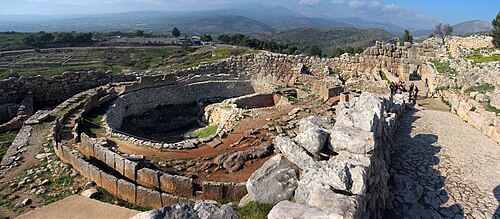
is located to the west of the citadel of Mycenae, approximately 70m from the Lion Gate, in an area used for burial since the Middle Helladic period ( c. 2000–1600 BCE). Its structure follows the typical tripartite division of Mycenaean tholos tombs into a narrow rectangular passageway ( dromos ), joined by a deep doorway ( stomion ) to a burial chamber ( thalamos ) surmounted by a corbelled dome. The dromos is approximately 22.45m long by 4.65m wide, while the thalamos is 13.96m in diameter and would originally have stood around 13m tall. Like most tholoi at Mycenae, it is cut into the slope, facing downhill.
A 'relieving triangle' was built above the tomb's lintel, helping to direct the stress from the weight of the masonry towards the supported ends of the lintel-stone and therefore to reduce the torque applied to the stone. Such a feature would become universal in later tholos tombs at Mycenae, but the Tomb of Aegisthus is the earliest tholos to feature it. Other innovations include the lining of the dromos with rubble and the use of poros ashlar masonry for the façade, both of which foreshadow architectural conventions common in later tombs.
There are a total of nine tholos tombs at Mycenae. None were discovered intact, having been looted in antiquity, probably during the Iron Age. A likely burial pit was discovered in the floor of the thalamos, but no human remains were recovered to indicate who, if anyone, might have been buried in it.
James Wright has described the construction of tholos tombs, using the Tomb of Aegisthus as an example, as a 'monumental expression of power'. Digging out the thalamos alone required the excavation of 1,810m 3 of earth, added to 585m 3 for the dromos — a total project which Wright estimates would require a ten-person team to work for 240 days, on top of additional labour for the procurement, preparation and arrangement of the rubble and ashlar masonry used in the dromos and stomion. He considers that the total construction of the tomb would have taken over a year, and required a large workforce including skilled stoneworkers. At the time of its construction, it was the largest tholos tomb in the Aegean.

During the excavation, Wace incorrectly concluded that the Tomb of Aegisthus had no relieving triangle, a judgement which remained the scholarly consensus until 1997, when the area above the lintel was cleared during conservation work. The work revealed that the interior of the triangle, photographed by Wace in 1922, had been filled with a blocking wall some time after its initial construction, though the intrusion of much-later ceramic material into the space, partly as the result of an earthquake, made it impossible to ascertain the precise date.
The façade of the stomion is faced with large blocks of poros stone ashlar, behind which the structure is built from rubble masonry like that which lines the dromos. Wace believed that the ashlar façade was a later addition to the tomb, and that the monument had been constructed in two phases — firstly, the tomb was built in its entirety using rubble masonry, and later, 'with the object of making its entrance more imposing', a new ashlar façade was added. In support of this conclusion, he noted that the rubble masonry is bonded by mortar to that of the stomion, but that the ashlar masonry of the stomion is not bonded to the rubble masonry behind it; in addition, the ashlar façade seems to play little role in supporting the structural weight of the thalamos 's corbelled dome. However, Wace's two-phase model has been questioned since the late 20th century: Clare Loader argued in 1998 that the ashlar façade may have played a structural role in buttressing the rubble one behind it, and so been added either during or immediately after the initial construction of the tomb, while Yannis Galanakis has argued that the tomb's unusual features may represent a single coherent plan, the result of 'architectural experimentation', perhaps influenced by the contemporaneous building of the tholos tomb at Berbati, and that the evidence is insufficient to tell whether the tomb was built in a single phase or in two.
Part of the stomion, showing ashlar-masonry façade in front of rubble View looking over the tomb, down the dromos. The small relieving triangle is just visible over the inner lintel. View of the inner wall of the dromos, showing the use of rubble masonry to line it
The tomb is named for Aegisthus, the mythological lover of Clytemnestra, wife of king Agamemnon of Mycenae. In Greek mythology, Aegisthus first murdered Atreus, Agamemnon's father, in order to restore his own father Thyestes to the throne; then, after Agamemnon drove him from power and departed for the Trojan War, Aegisthus became the lover of Clytemnestra and, on Agamemnon's return from Troy, assisted her in murdering the king. He then ruled Mycenae for seven years until he was killed in turn by Orestes, Agamemnon's son, alongside Clytemnestra.
The nearby Treasury of Atreus or 'Tomb of Agamemnon' was traditionally known by that name long before the renewal of archaeological interest in it in the 19th century. The Tomb of Aegisthus is so named because it is positioned adjacent to another tholos, known as the 'Tomb of Clytemnestra'. The precise origin of its name is uncertain: Christos Tsountas, who first published the rediscovery of the tomb in 1892, did not name it, only referring to it as "another [tomb] not far from the Lions' Gate", nor did he assign it a name in his 1897 publication of The Mycenaean Age. Alan Wace mentioned that the tomb is "now christened the Tomb of Aegisthus" in his 1923 write-up of his excavations, and had previously referred to it by that name in the excavation daybook of 1922.

The dome collapsed some time after the tomb's construction: from an original height of c. 13m, only about 8m of height remains.
Wace noted finds of Geometric, Classical and Hellenistic pottery, particularly in the dromos, which he interpreted as the remains of post-Mycenaean tomb-robbers. However, it has since been suggested that they may represent the use of the tomb for ' hero cult ' from the Iron Age onward, a practice observed at many of the Mycenaean chamber tombs at Mycenae and other sites in the Argolid, such as Prosymna. The tomb may have played an ideological role for the short-lived Argive colony at Mycenae, established in the 3rd century BCE but abandoned within a century, which restored the so-called "Agamemnonion" (shrine of Agamemnon) between Mycenae and Prosymna and may have used the Mycenaean tombs now known as "Aegisthus", "Epano Phournos" and "Clytemnestra" as a focus for the commemoration of Mycenae's heroes, in doing so asserting its status and prestige vis-à-vis Argos.
The 1922 excavations also found a layer of ash inside the thalamos, with the remains of several olive kernels, on top of the traces of the collapsed dome. Wace hypothesised that this reflected the use of the tomb, after the end of the Mycenaean period, as a shelter for 'shepherds, outlaws or others having work in the neighbourhood', and that the kernels represented the remains of food, particularly bread and olives, that they ate around campfires while sheltering from the wind.
The tomb is located to the west of the citadel of Mycenae, approximately 70m from the Lion Gate, in an area used for burial since the Middle Helladic period ( c. 2000–1600 BCE). Its structure follows the typical tripartite division of Mycenaean tholos tombs into a narrow rectangular passageway ( dromos ), joined by a deep doorway ( stomion ) to a burial chamber ( thalamos ) surmounted by a corbelled dome. The dromos is approximately 22.45m long by 4.65m wide, while the thalamos is 13.96m in diameter and would originally have stood around 13m tall. Like most tholoi at Mycenae, it is cut into the slope, facing downhill.
A 'relieving triangle' was built above the tomb's lintel, helping to direct the stress from the weight of the masonry towards the supported ends of the lintel-stone and therefore to reduce the torque applied to the stone. Such a feature would become universal in later tholos tombs at Mycenae, but the Tomb of Aegisthus is the earliest tholos to feature it. Other innovations include the lining of the dromos with rubble and the use of poros ashlar masonry for the façade, both of which foreshadow architectural conventions common in later tombs.

There are a total of nine tholos tombs at Mycenae. None were discovered intact, having been looted in antiquity, probably during the Iron Age. A likely burial pit was discovered in the floor of the thalamos, but no human remains were recovered to indicate who, if anyone, might have been buried in it.
James Wright has described the construction of tholos tombs, using the Tomb of Aegisthus as an example, as a 'monumental expression of power'. Digging out the thalamos alone required the excavation of 1,810m 3 of earth, added to 585m 3 for the dromos — a total project which Wright estimates would require a ten-person team to work for 240 days, on top of additional labour for the procurement, preparation and arrangement of the rubble and ashlar masonry used in the dromos and stomion. He considers that the total construction of the tomb would have taken over a year, and required a large workforce including skilled stoneworkers. At the time of its construction, it was the largest tholos tomb in the Aegean.
During the excavation, Wace incorrectly concluded that the Tomb of Aegisthus had no relieving triangle, a judgement which remained the scholarly consensus until 1997, when the area above the lintel was cleared during conservation work. The work revealed that the interior of the triangle, photographed by Wace in 1922, had been filled with a blocking wall some time after its initial construction, though the intrusion of much-later ceramic material into the space, partly as the result of an earthquake, made it impossible to ascertain the precise date.
The façade of the stomion is faced with large blocks of poros stone ashlar, behind which the structure is built from rubble masonry like that which lines the dromos. Wace believed that the ashlar façade was a later addition to the tomb, and that the monument had been constructed in two phases — firstly, the tomb was built in its entirety using rubble masonry, and later, 'with the object of making its entrance more imposing', a new ashlar façade was added. In support of this conclusion, he noted that the rubble masonry is bonded by mortar to that of the stomion, but that the ashlar masonry of the stomion is not bonded to the rubble masonry behind it; in addition, the ashlar façade seems to play little role in supporting the structural weight of the thalamos 's corbelled dome. However, Wace's two-phase model has been questioned since the late 20th century: Clare Loader argued in 1998 that the ashlar façade may have played a structural role in buttressing the rubble one behind it, and so been added either during or immediately after the initial construction of the tomb, while Yannis Galanakis has argued that the tomb's unusual features may represent a single coherent plan, the result of 'architectural experimentation', perhaps influenced by the contemporaneous building of the tholos tomb at Berbati, and that the evidence is insufficient to tell whether the tomb was built in a single phase or in two.
Part of the stomion, showing ashlar-masonry façade in front of rubble View looking over the tomb, down the dromos. The small relieving triangle is just visible over the inner lintel. View of the inner wall of the dromos, showing the use of rubble masonry to line it
Closest places in our Greece guide.
More places to explore in Greece.