Belgium
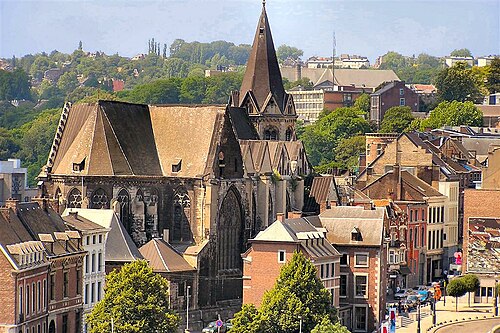
St. Saint-Michel En-Sauvenière Church
Parish church · Liège
Opera house
opéra royal de Wallonie

The Opéra royal de Wallonie (French pronunciation: [ɔpeʁa ʁwajal də walɔni], lit. 'Royal Opera of Wallonia') is an opera house located on the Place de l'Opéra, in Liège, Belgium. Together with La Monnaie and the Vlaamse Opera, the Opéra royal, as it is colloquially known, is one of the three major opera houses in Belgium. From the beginning, the institution occupied the Théâtre royal in Liège, a building loaned by the city (inaugurated on 4 November 1820).
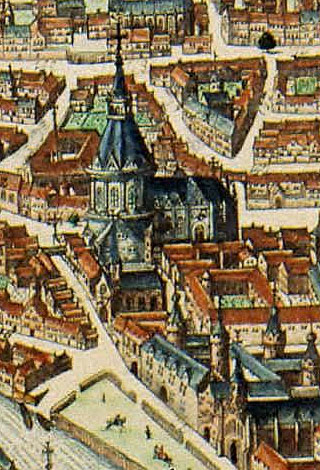
In 1816, King William I of the Netherlands transferred the land and materials of the former Dominican convent to the city of Liège, on condition that a theatre be built there.
The first stone was laid on 1 July 1818 by Mademoiselle Mars. Built according to the plan of the architect Auguste Dukers, the theatre in the neoclassical style has a massive parallelepipedic shape. Its main façade is decorated with a marble colonnade limited by a balustrade and overlooking the arcades on the ground floor. The Théâtre royal de Liège was inaugurated on 4 November 1820.
The city became the owner in 1854. The statue in front of the building represents the Liège composer André Grétry and is the work of the sculptor Guillaume Geefs. The musician's heart was placed in the base of the statue in 1842. In 1861, the architect Julien-Étienne Rémont profoundly transformed the room and the building, which was several metres long at the back and sides. The new Second Empire style hall could then accommodate more than 1,500 spectators.
The First World War was a difficult period for the opera: in August 1914, the building was requisitioned by the German army to serve as a stable and dormitory, and it was not until October 1919 that it reopened. The Exposition internationale de Liège, in 1930, was the occasion for the definitive installation of a vast pediment with a set of allegorical figures, sculpted on the façade by Oscar Berchmans. In the same year, the city proceeded to remove the façades, which lost their white plaster. The building was spared during the Second World War.

In 1967, the troupe of the Opéra royal de Wallonie was created, on the basis of the former opera company of the Théâtre royal de Liège and that of Verviers. It is constituted as a non-profit association, initially comprising the cities of Liège and Verviers. The Ministry of National Education and French Culture of the time was financially involved shortly afterwards. During the communitarisation, the Opéra royal de Wallonie became part of the French Community of Belgium, which compensated for the impecuniosity of the city in 1990, and has since been its main source of funding. A few years later, the City, Liège Province and the Walloon Region gradually took over its financing.
The building was classified as a monument by Wallonia by decree of 18 March 1999.
The building underwent a major renovation from March 2009 to September 2012, both exterior and interior. The historic parts have been restored to their original state (large foyer, main staircase and hall). Its showroom (capacity 1,041 seats), Italian-style and its stage machinery make it one of the most modern theatres in the world.
The building was also expanded. An ultramodern structure has been installed in height in order to increase the height of the stage cage, and is equipped with a so-called multi-purpose room (Raymond Rossius Room) that can accommodate smaller shows, rehearsals or symposiums, conferences, and workshops. The renovation plans were prepared as a collaboration among three architectural firms, A2RC, Aa Architectes associés and Origin Architecture et Engineering.
From November 2009 until the end of the construction period, performances were held at the "Palais Opéra": a tent temporarily erected on the Bavarian Hospital space.

The renovated Opéra Royal de Wallonia was inaugurated on 19 September 2012, with a performance of César Franck's Stradella (1841), staged here for the first time, in a production by Jaco Van Dormael, in the presence of the Belgian heir couple, Philippe and Mathilde.
In 1816, King William I of the Netherlands transferred the land and materials of the former Dominican convent to the city of Liège, on condition that a theatre be built there.
The first stone was laid on 1 July 1818 by Mademoiselle Mars. Built according to the plan of the architect Auguste Dukers, the theatre in the neoclassical style has a massive parallelepipedic shape. Its main façade is decorated with a marble colonnade limited by a balustrade and overlooking the arcades on the ground floor. The Théâtre royal de Liège was inaugurated on 4 November 1820.
The city became the owner in 1854. The statue in front of the building represents the Liège composer André Grétry and is the work of the sculptor Guillaume Geefs. The musician's heart was placed in the base of the statue in 1842. In 1861, the architect Julien-Étienne Rémont profoundly transformed the room and the building, which was several metres long at the back and sides. The new Second Empire style hall could then accommodate more than 1,500 spectators.
The First World War was a difficult period for the opera: in August 1914, the building was requisitioned by the German army to serve as a stable and dormitory, and it was not until October 1919 that it reopened. The Exposition internationale de Liège, in 1930, was the occasion for the definitive installation of a vast pediment with a set of allegorical figures, sculpted on the façade by Oscar Berchmans. In the same year, the city proceeded to remove the façades, which lost their white plaster. The building was spared during the Second World War.

In 1967, the troupe of the Opéra royal de Wallonie was created, on the basis of the former opera company of the Théâtre royal de Liège and that of Verviers. It is constituted as a non-profit association, initially comprising the cities of Liège and Verviers. The Ministry of National Education and French Culture of the time was financially involved shortly afterwards. During the communitarisation, the Opéra royal de Wallonie became part of the French Community of Belgium, which compensated for the impecuniosity of the city in 1990, and has since been its main source of funding. A few years later, the City, Liège Province and the Walloon Region gradually took over its financing.
The building was classified as a monument by Wallonia by decree of 18 March 1999.
The building underwent a major renovation from March 2009 to September 2012, both exterior and interior. The historic parts have been restored to their original state (large foyer, main staircase and hall). Its showroom (capacity 1,041 seats), Italian-style and its stage machinery make it one of the most modern theatres in the world.
The building was also expanded. An ultramodern structure has been installed in height in order to increase the height of the stage cage, and is equipped with a so-called multi-purpose room (Raymond Rossius Room) that can accommodate smaller shows, rehearsals or symposiums, conferences, and workshops. The renovation plans were prepared as a collaboration among three architectural firms, A2RC, Aa Architectes associés and Origin Architecture et Engineering.
From November 2009 until the end of the construction period, performances were held at the "Palais Opéra": a tent temporarily erected on the Bavarian Hospital space.
Closest places in our Belgium guide.
More places to explore in Belgium.